The following story “Fairies and Far Away Places” was submitted by Margaret Ayad, board member of The Bay Roberts Cultural Foundation , and documents their Culture Days 2011 experience.
To understand what Culture Days means to our small town, you need to be aware of the unique cultural heritage in Newfoundland and Labrador. For at least 400 years, Newfoundlanders and Labradoreans have been living on this island, and in the case of Labrador, along an isolated coast. Traditions are strong. Remember, Newfoundland and Labrador did not join Canada until 1949. We have much to preserve and share. One aspect of our cultural heritage that is unique in the Canadian experience is our fairy stories. Although fairy stories did not form a special event during Culture Days, fairy stories have been woven into life in this far away corner of Canada.
Geocoaching Weekend on the Bay Roberts East Shoreline Heritage Walk
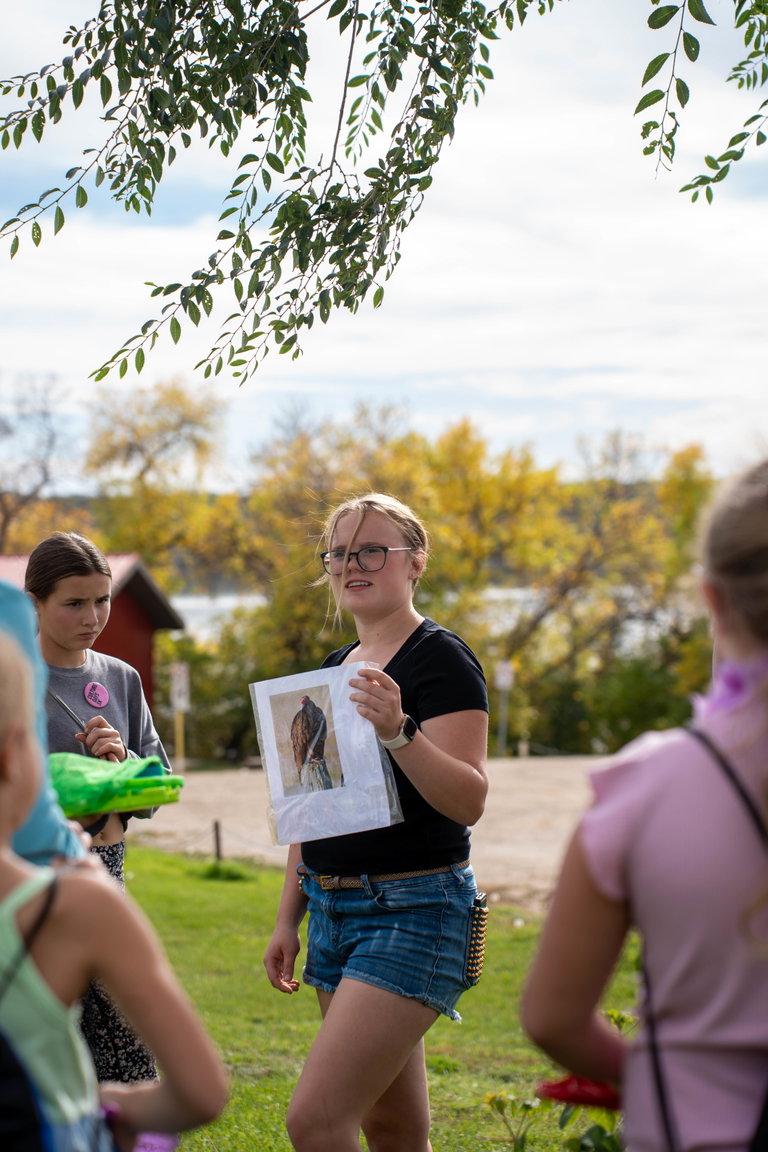
For the geocoaching weekend on the Bay Roberts East Shoreline Heritage Walk, each participant was given a “Cacheport” which led to three sites on the 8 km. trail. In each of the geocoaches was a question about the heritage of the town. The participants wrote the answers in allotted spaces on the “Cacheport.” The completed Cacheport was then entered into a draw for a prize, which was awarded on Sunday.The 8km, spectacular hiking trail is located at the tip of the Bay Roberts peninsula and covers the first settled area of the town. Welcoming visitors are whispers of wind and waves from the Atlantic Ocean, cries from wild birds, echoes from setters of the past, and imagined beckoning calls and music from fairies. Hikers stand where French fishermen, as long ago as the 1500s, cured their fish on flat beach rocks calling the area Baie de Robert. They walk through foundations of homes, restored rock walls, family grave yards, and refurbished root cellars on land where English fishermen and later their families lived and worked for almost 400 years. There is even a legend that a Viking, on his way to the New World, stood on the mast of his boat and made markings on the rocks at Scoggins Gulch.
It is so easy to imagine a fairy enticing the solitary hiker or berry picker into the wooded areas or to the edge of 100 foot cliffs plunging to the Atlantic Ocean. Local people, who went to the barren areas berry picking or to the wooded areas looking for firewood, turned their clothes inside out and carried a crust of bread in their pockets to keep the fairies away. Our fairies do not treat intruders kindly – they have put people “into the fairies,” which is a trance like state, from which people never recover. They injure the limbs or the cause the person to be covered in hair which will not stop growing. They have even kidnapped children, leaving a changeling fairy instead. So, hikers must remember to bring their crust of bread or turn a piece of clothing inside out while Geocoaching!
David French’s Salt-Water Moon
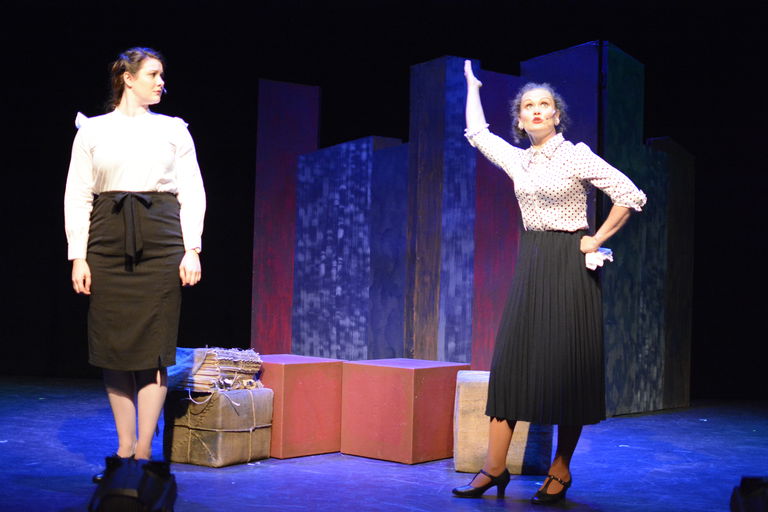
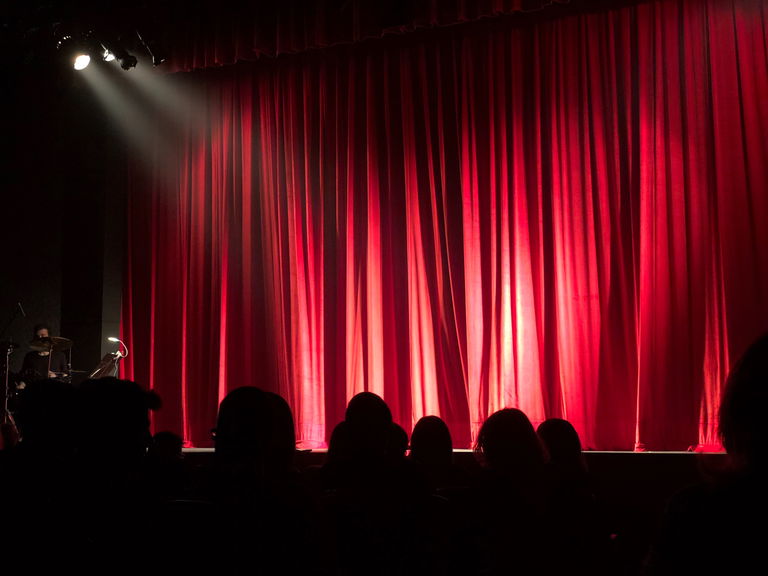
It was so special to watch David French’s Salt-Water Moon performed in the town where the play is set. David French was born in Coley’s Point which is part of Bay Roberts. The Victoria LOL#3 Museum and Playhouse was able to offer the play two nights for free to the general public because each night was sponsored by local real estate businesses, and a door prize was offered each night by two local B&Bs.Although Salt-Water Moon is performed all over the world in different languages, it speaks especially to the heritage of our town. Many people in this area of Newfoundland and Labrador were involved in the Labrador fishery. They worked for a local merchant, traveling to Labrador on his sailing ship, and living on the Labrador coast from spring to fall. When they returned home in the fall, they shared profits from the voyage. In Salt-Water Moon, Jacob Mercer’s father, was what he called “in collar” to the merchant because they did not have a good fishery that season. Jacob ran away to Toronto because he was so angry at the way his father, a war hero from Beaumont-Hamel where so many Newfoundlanders had died, was being humiliated by the town merchant.
Jacob and Mary speak of walking to North River to have a person charm Jacob’s tooth. Charming a toothache is part of local tradition. The person who charms the tooth speaks a few special words or prays or touches the tooth in a certain way… and the tooth ache is gone. A similar method is used by healers in the community to take away warts.
David French’s characters, Jacob and Mary, also talk about turning clothing inside out and carrying a crust of bread for the fairies while they were walking through the woods.
You cannot imagine how heart-warning it was to hear the dialogue of Salt-Water Moon. Each night’s performance was greeted with a standing ovation. So much in the play is local, that it is a real tribute to David French’s writing that it can be viewed and appreciated on another level by people from all over the work.
Mussels and Music at the Three Sisters
The Mussel Boil at the Three Sisters was another wonderful event. The weather was warm so people were in their summer clothes. MP Scott Simms from the neighbouring constituency dropped by – so we had a celebrity visitor! David Fitzpatrick, a local singer and songwriter, performed with Christine Saunders, and her son, Kimbel. David actually performed a locally written song called Madrock which referrers to an area on the Shoreline Heritage Walk at the end of the peninsula where the seas are mad.
We hope the fairies enjoyed the music and laughter as much as we did!
The Bay Roberts Cultural Foundation organized these activities for the 2011 edition of Culture Days. With modern communication and travel and increased immigration, people across the world are currently sharing a similar cultural milieu. What we sought to do during Culture Days was to celebrate what has been unique about culture and heritage in our town. Being part of the swirling seas of modern culture is amazing, but we do not want people in our community to lose their roots, or as Ted Russell, a well-known Newfoundland and Labrador author, who was also born in Coley’s Point, put it … we do not want them to lose their “Holdin’ Ground.”
If you have something to say about public participation and engagement in arts and culture, post it on the Culture Days blog! Submit your vision or post from your own blog via email at stories[at]culturedays[dot]ca and Culture Days will share your story with the growing network.