Community collectives keep art alive—how can we support them in doing so?
Culture Days
Oct 4, 2024
Almost eight years ago, I came across a callout for artists to showcase their works in a gallery setting. I was ready to share my art with the world, but something about the submission process felt off.
From my perspective, it seemed like I was having to put more effort into proving myself than artists who weren’t like me—I couldn’t help but wonder if me being Queer, disabled, and BIPOC played a role in how they handled my application. My work was rejected, and I watched shows proceed without any word from the curators about why I had been treated negatively. Over the years, there have been many other instances where I didn’t feel safe and included in creative circles because of who I am. Even when I do get opportunities to share my work and knowledge, I’ve found that many art spaces don’t have policies in place to protect marginalized artists.
Queer BIPOC artists in Victoria, especially disabled ones, need better support, and I want to do my part—and there are ways that you can, too.
Today, I am the founder, curator, and administrator for Meltshot Brownie Art and Performance Collective. We have over 10 multidisciplinary artists in the collective, most of whom are some combination of genderqueer, racialized, and disabled. In the collective, we recognize that life is fluid, so artists can come in and out as they please. There’s no paperwork, no fees, no competition, and we share art supplies to help make ends meet. Our members take care of one another, as we have varying levels of need and ability. In an industry that encourages competition, we believe that everyone has something to offer, and it’s okay to help each other out. You need to find your people and create a community in order to succeed.
The art world is full of expectations and competition that nobody really explains to you, and being part of a marginalized group only makes it more complicated. Finding opportunities to display and exhibit art isn’t exactly what it may seem to be—as an artist, most of your time is spent doing admin work rather than creating.
The pandemic hit around the time of our first exhibition and the collective was temporarily shut down. Despite being immunocompromised, I continued organizing. I put myself at risk, knowing that the work we were doing needed to continue.
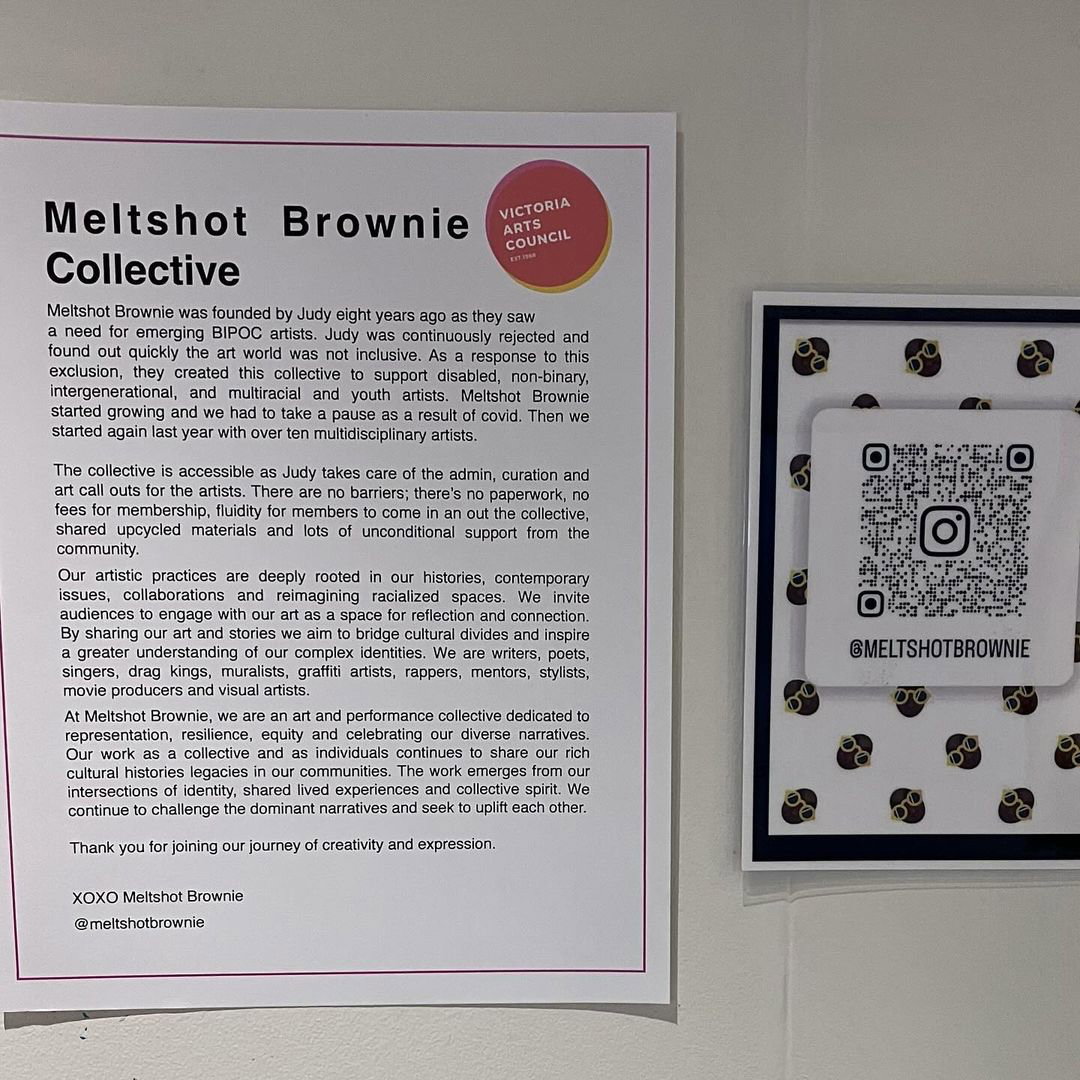
Carrying that weight isn’t sustainable for one person—so how can we ensure that community arts collectives are able to stay afloat?
The arts industry has gradually shifted to pushing for inclusivity, accessibility, and representation to the point where tokenization and exploitation can occur. I know I score high for funders because I am a disabled BIPOC artist, and so do most of the members of Meltshot Brownie, which is why, from what I’ve observed, the collective has appeared to become a go-to for organizations looking to appear more inclusive. Although I appreciate when organizations actively seek to diversify their selection of artists, I have to question their motives and be aware of why they’re choosing to do so. Potential collaborators have asked me to participate in programming without offering compensation for my art. I’ve become careful to only work with select organizations who understand how and want to best support artists like me—because not all exposure is coming from a place of authenticity and respect.
Meltshot Brownie is fortunate to have community members who take the time to build kinship with us, and who inform us about opportunities that respect the value of our work and align with our goals as artists. We’ve greatly benefited from mutual aid models, which allow us to forage upcycled art supplies. I am deeply touched by how much people care about the existence of this collective, and it is in these communities that we find the support needed to continue our work.
In order to create, artists need resources, and to afford them, they require funding that, under current systems, can only really be achieved through hours upon hours spent doing administrative tasks. We don’t have the capacity to form a nonprofit or a charity, nor do we want to, as we feel that adapting to bureaucratic demands would hinder our creativity. Every funding body requires different details in applications. It’s convoluted, even for artists who aren’t facing extra challenges. There is already so much writing, organizing, and researching involved that not everyone is capable of doing, and applying for extra support in order to complete these applications adds yet another layer of required labour. But artists also need this time to make art. It seems impossible to have both enough time and money without sacrificing your well-being—especially as a disabled person.
I believe that if organizations and funders truly want to make creative work easier for marginalized communities, they should consider investing more resources into community collective groups like Meltshot Brownie—groups that ensure artists are being treated fairly and equitably.
It’s easy to get caught up in the bureaucratic side of the art world and forget why we were drawn to creating in the first place. At the end of the day, it shouldn’t be about winning—like competing for funding or fighting for gallery spots—but about building community and keeping an open mind. Our collective relies on mutual aid and the generosity of our community, and in return, we provide them with art to engage with and enjoy. The only way to survive (and thrive) as an artist is by accepting help, and by being willing to support others.
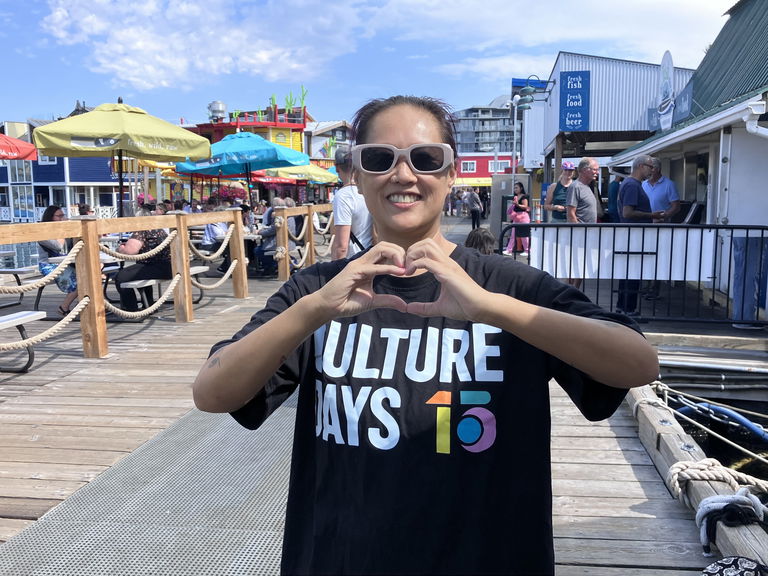
Judy Woo (she/they) is a Victoria-based multidisciplinary artist, a BC Culture Days 2024 Ambassador, and a founding member of the intergenerational arts collective Meltshot Brownie, which reimagines spaces for disabled, BIPOC, and non-binary artists. Their Culture Days workshop Patchwork Poetry - Poetry for Your Ancestors is happening at Bayanihan/ Filipino Community Centre on Sat, Oct 5, 12:30pm – 3:30pm. For more information, visit culturedays.ca.
More in: BC Ambassador Series
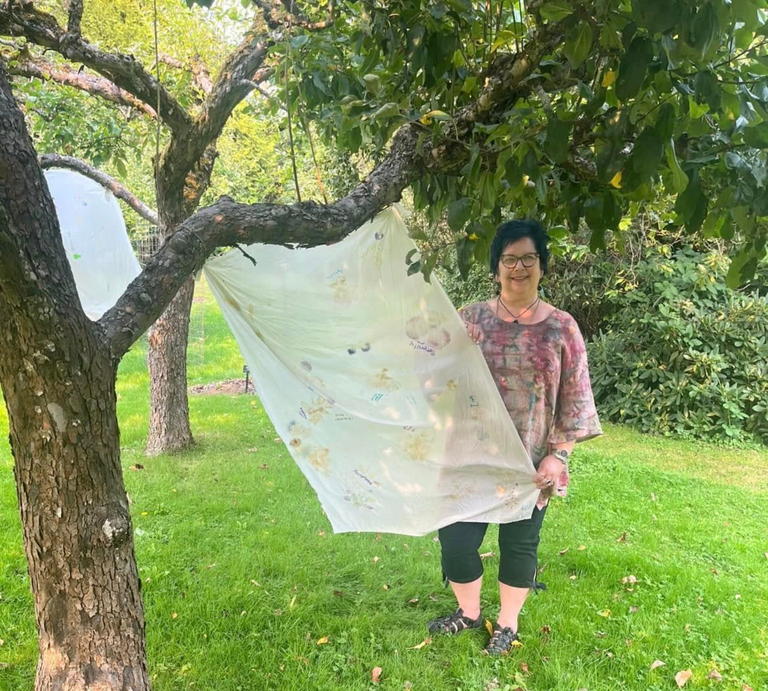
A Legacy of Community Connections—an Interview with Lyn Verra-Lay, Matchmaker of the Arts
Mallory Gemmel
Mar 26, 2025