A Legacy of Community Connections—an Interview with Lyn Verra-Lay, Matchmaker of the Arts
Mallory Gemmel
Mar 26, 2025
A Legacy of Community Connections—an Interview with Lyn Verra-Lay, Matchmaker of the Arts
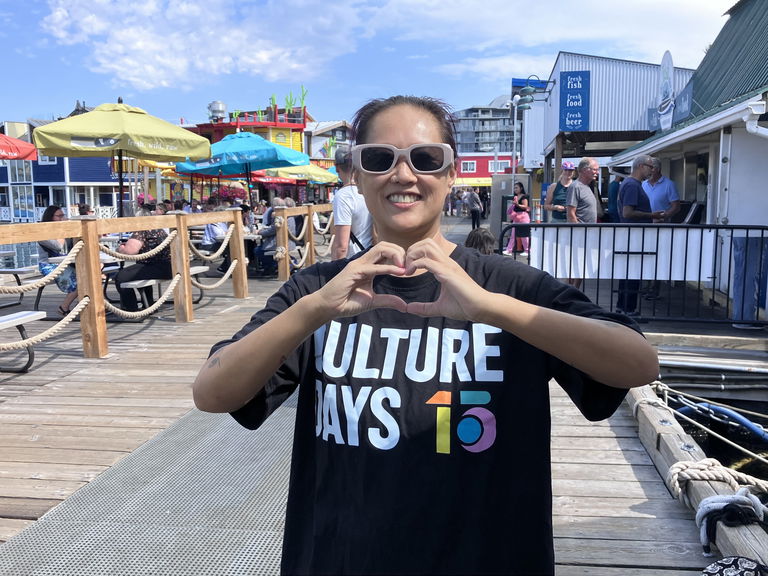
Lyn Verra-Lay has spent a lifetime dedicated to the arts. For over 40 years, creativity has oozed into every corner of her personal life and enlightened every endeavour along her professional path. Her stories, anecdotes, and creative experiences are boundless; she’s a performer, a singer, a visual artist, an educator, a cultural ambassador, a unionized arts worker, a facilitator, a community connector, and a self-described arts matchmaker. In 2017, she acted as the BC Culture Days Ambassador for Surrey, actualizing a project that celebrated the Surrey Arts Centre’s 50th anniversary and community reverence.
Her latest labour of love is Belinda’s Connection Café—an inclusive and intercultural art workshop series for seniors that has taken place in Surrey, Semiahmoo, and, in Delta, where she resides. The program is growing as community interest and access to funding increases; its first five sessions were made possible by a micro community grant of $1,000 and hours of Lyn’s volunteered time.
Lyn’s repertoire and arts story act as a beacon in demonstrating the importance of community arts initiatives and organizers. She’s a nurturer of creative connections, continually building strength in her community and promoting wellness through the arms of art, creativity, and culture.
Mallory: What memory stands out the most from your time as a BC Culture Days Ambassador in 2017?
Lyn: The whole experience still stays with me, and I still stay connected to Culture Days. If nothing else, just to share every year when you're looking for ambassadors—it always reminds me of the great experience I had.
In 2015, I was volunteering for another Culture Days Ambassador (Mandeep Wirk) a couple of years before I was one. And she said, “Oh, this is really great that you're helping me.” And I said, “Well, I'm really kind of being selfish, because I just want to learn what you do, and be like an apprentice for the day.” And she says, “You know, you should do this.”
I didn't think that I was capable of being an ambassador. And then the next year she asked me, “Did you apply?” My response, “No, I did not.” The next year she asked me again and told me I needed to apply. So I thought, what's it going to hurt? And then I got the position! So, just goes to show you, if you don't do anything, the answer is always no.
Mallory: Tell us about the Culture Days event you organized as an ambassador. Why did you put forth the project, “50 Years of Culture: Celebrating the Surrey Arts Centre?”
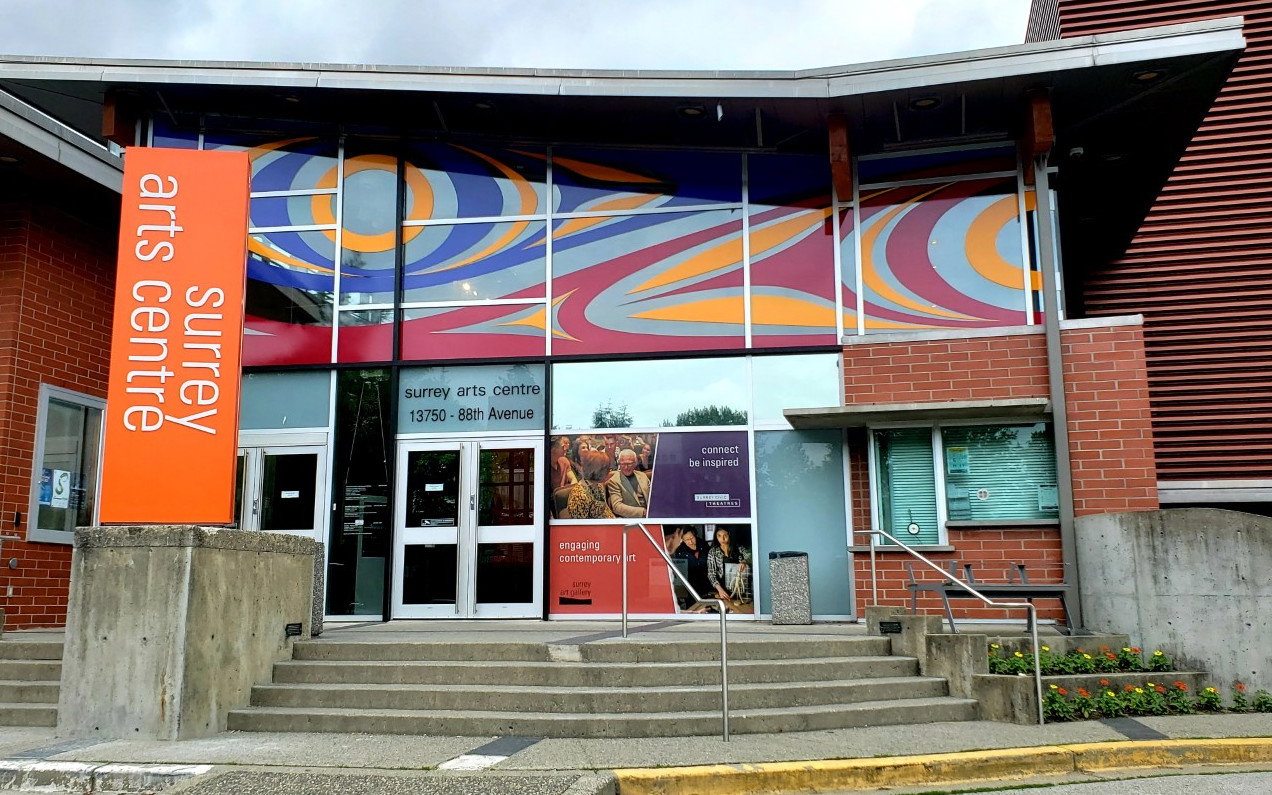
Lyn: [What’s known today as] The Surrey Arts Centre was a centennial project in 1967, built for the 100th birthday of Canada. It was called the Centennial Arts Centre when I was a kid. We used to live not too far away. The centre is in Bear Creek Park, and there are salmon streams there, and my brother and I used to ride our bike down there and scrape clay out of the creek and make things with it. Many years later, I ended up working as a children's art instructor, and I’d do clay projects with them. That was a really big, full circle thing for me.
One of the more interesting things that I did for the 50 Years of Culture: Celebrating the Surrey Arts Centre Culture Days project was doing the research and going to the Surrey Archives. It was really satisfying to do the research to find out more about the building. There were so many things that I ran into that I remembered happening. I’ve been hanging around that centre for a long time. In 1976, I was in a community band that my Dad conducted [for 31 years] called Whalley Legion Junior Band. We were recorded on stage performing at the centre’s theatre. The original vinyl was transferred to a CD, which sounds really good quality wise. So not only was I researching and finding things about this facility and its connection to the community, but I popped up within that timeline. I realized that I was a part of the arts community because I was involved in all these things throughout my life.
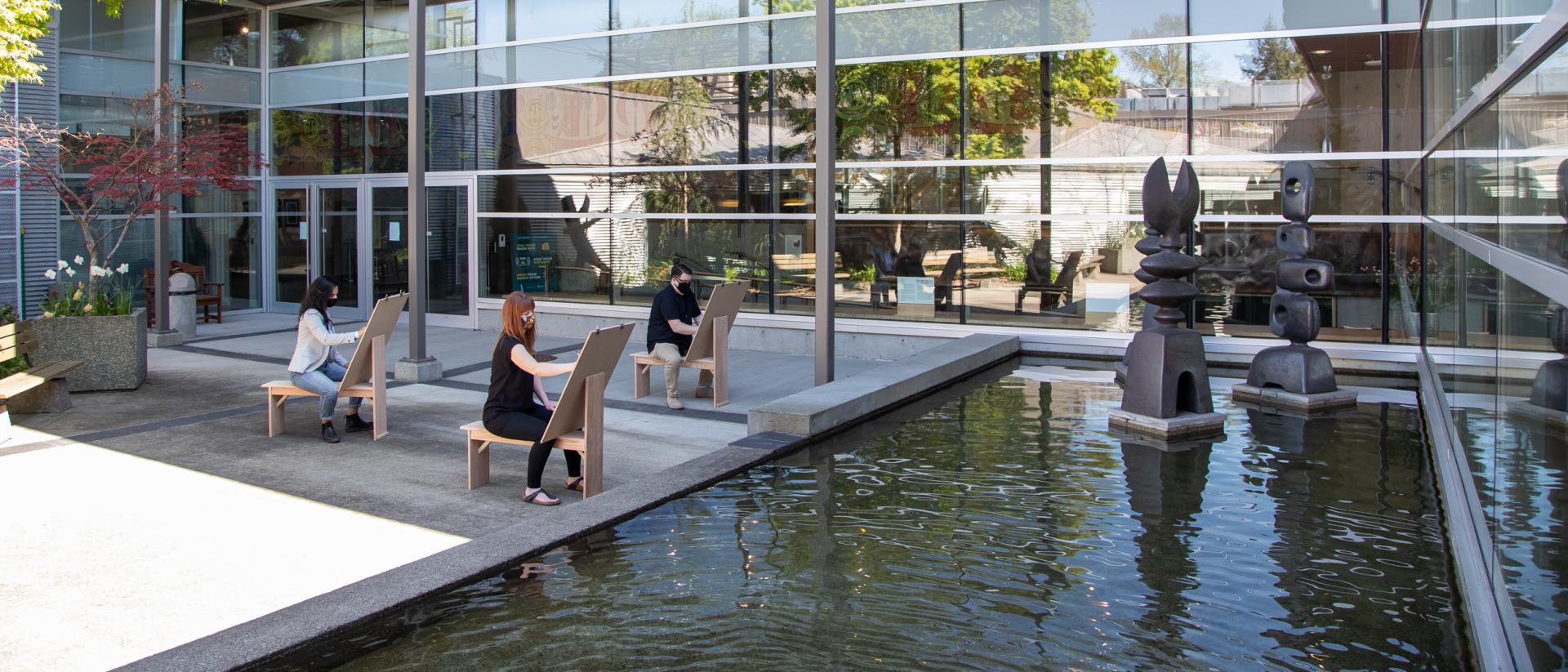
And, of course, I started working at the Surrey Arts Centre, and I've been working there 27 years now. I’ve retired from my main job, but I'm still an artist educator there. I’ve done many things there, and the connection is very personal to me, as well as far reaching in the community.
Mallory: What were the Culture Days events that you put on as part of the project? At that time Culture Days spanned over the course of the weekend. What sort of activities did you coordinate?
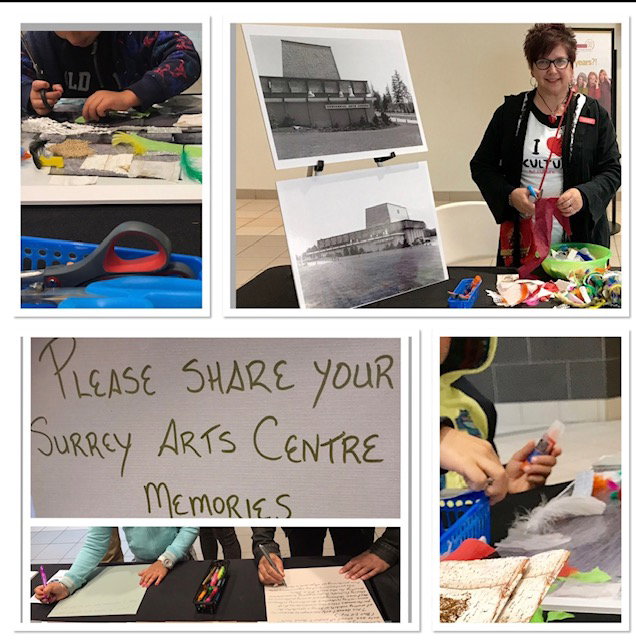
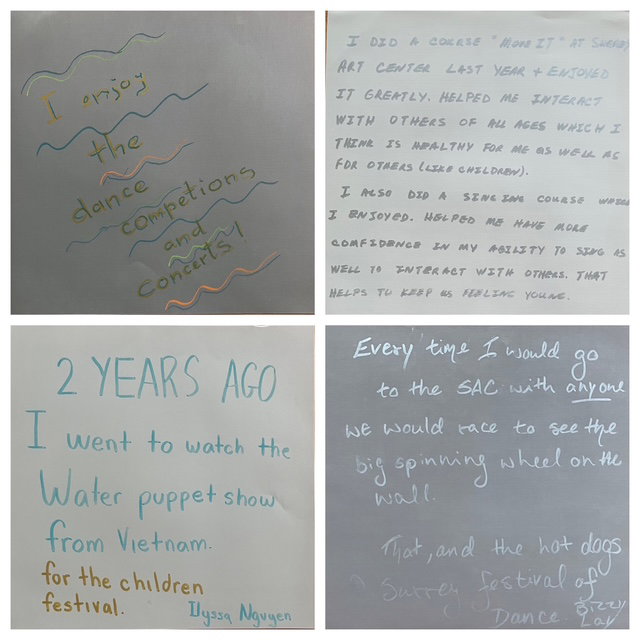
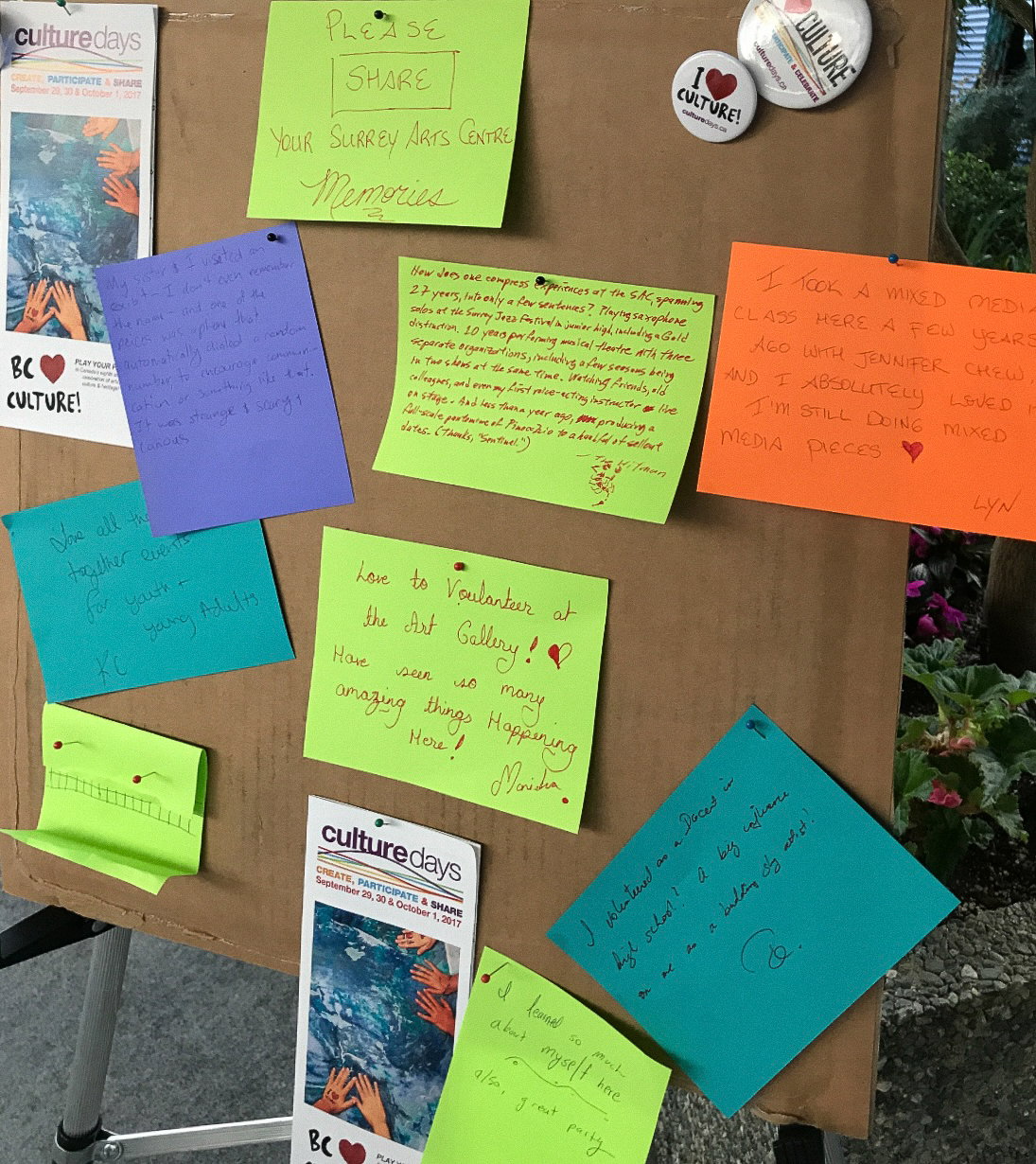
Lyn: On the Friday, the Youth Arts Council of Surrey Arts Night which included community art painting, an Indian Classical Dance workshop, Photo Booth, and art pop up. On Saturday, [at Central City Shopping Centre] I had two community projects: Surrey (Centennial) Arts Centre photo collaging and Surrey Arts Centre Memory Book. I had a large photo of the original building printed out, and that became a collage piece. People were able to collage on that. The other piece was more historical. We asked people to share experiences of the Surrey Art Centre from any point in time, and write them down on recipe cards. Like, what do you do at the arts centre? Have you taken any courses here? Does your child have an experience to share? During the weekend, I would run into people that I hadn't seen for years, or that I didn't know had a connection with the Surrey Art Centre.
Mallory: What happened with all the stories collected after the fact?
Lyn: I have all the story cards in a photo album. So, we have all those pieces still saved. I know things happened before I ended up working and performing at the Surrey Arts Centre. There's a lot of people that enjoy their time here. It really is an important facility in our community. Thank goodness there are people that had the foresight to have started this. We need to have this kind of venue. We need to have a place for people to see as the hub of arts in Surrey. I knew most of the things that went on there. But then there were other things that people said that I'd never heard of. So, I got to learn more of the history and it was a learning piece for me too.
Mallory: The archival piece of it all is so important! It’s important to capture those stories.
Lyn: Yes. I would love to do something like that again. I've been thinking about it—maybe a 10 year anniversary project in 2027. And just see where that goes because the building has changed. Our community has changed. And, I'd like to see how people have connected to the centre since 2017.
Mallory: Where did things take you after Culture Days 2017? What sort of arts and culture connections did you grow after the program?
Lyn: I had more of an awareness of the bigger picture of the arts in the community. I was able to do more projects from that with people that I had met. There were people that I had already known in the community, as we had crossed paths for different reasons, but I was then actively making plans to do things with people.
Now sometimes people say to me, “Oh, you're the person that knows everything about art in the city!” Which is, a compliment. Clearly, I don't know everything. But I've had so many connections that I've built over 40 years in the community. Now people approach me with projects.I got a job at a senior’s residence being an on-call art teacher and activity person. So that means I was doing things like sing-a-longs with seniors. The same year as my Culture Days project, I got to sit on a float in the Sea Festival parade in White Rock, which is something I always sort of dreamed of doing! Opportunities have come to me, which I've been really appreciative of, including opportunities to speak at things and opportunities to do art projects—like for the Surrey Pride Society. I was also selected as an Artist-in-Residence for Darts Hill Garden last summer, which culminated from a participant in one of my silk dyeing classes, encouraging me to apply! And often these things are paid opportunities as well, so that doesn't hurt, since I'm semi-retired. I receive a pension from the city, so now I can choose to do the things I want to do, which is a lovely freedom. It comes back to being appreciative and thankful for having been able to work at the Surrey Art Centre.
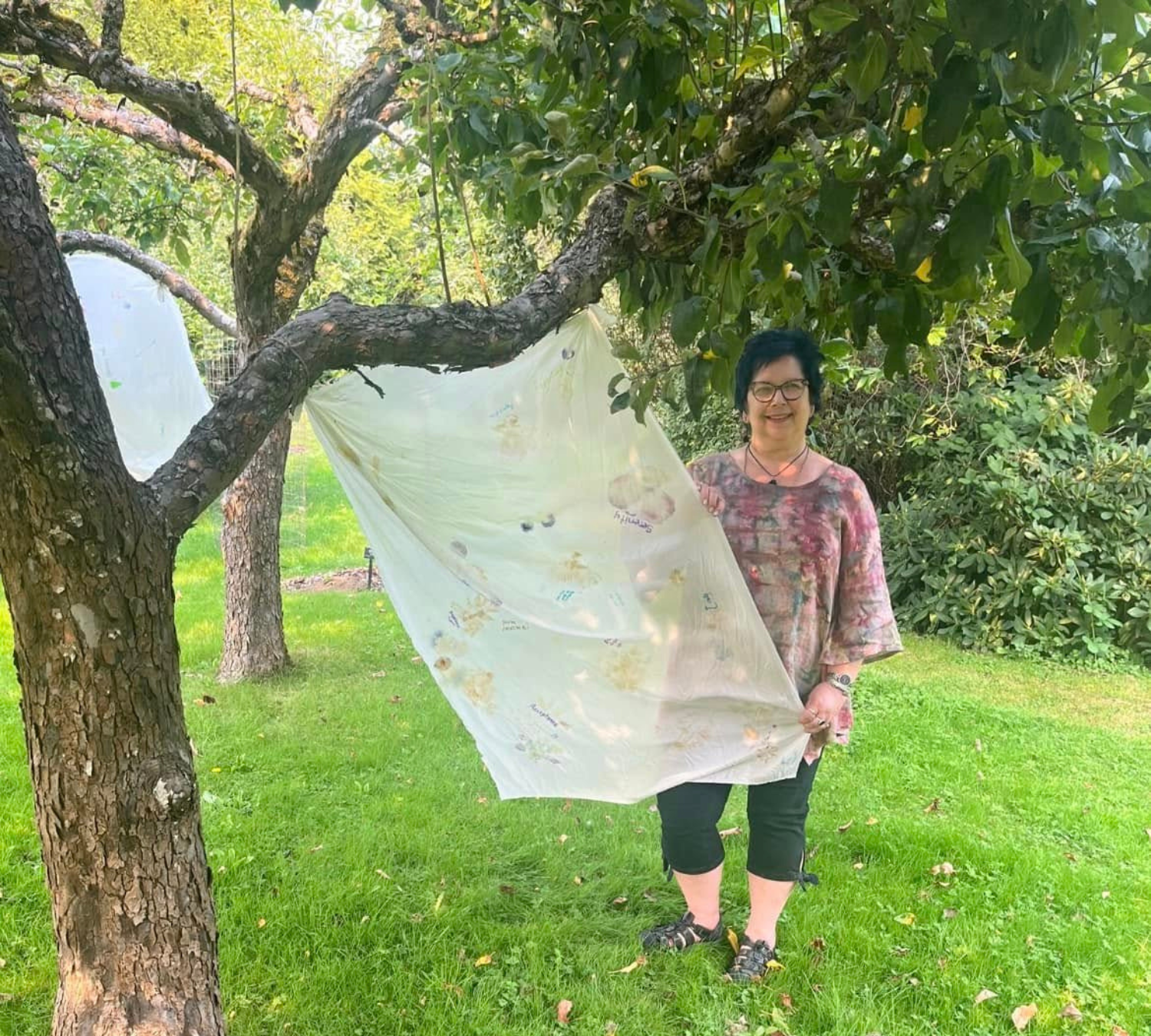
I’m definitely conscious of the fact that I’m lucky to be working in the arts. I like to pay it forward. If someone offered me an opportunity and didn't have any money, I would probably do it. I feel like in that way, I can also give back to the community. The connections you build are so important. I've been able to really utilize my position as a Culture Day's ambassador.
Mallory: It sounds like the experience was also a confidence builder for you—giving you that time to build those relationships and have those conversations. At the beginning of the interview, you mentioned that you originally felt nervous to apply for the program!
Lyn: Yeah, I totally didn't think I was going to get it! Just thinking back to how I saw Mandeep as a leader in the Surrey arts community… I don't think I'm quite there yet, but I'm pretty close to what I saw her as, and I'm just realizing that now! She’s got a different experience than me, but I have the qualities and I'm doing the things that I saw her doing. Thank you for asking about that!
Mallory: So, your professional work has consistently included some form of arts and community care—from your time at the Surrey Arts Centre to providing vital resources as an emergency-response community builder with United Way during the pandemic. Can you tell us more?
Lyn: In 2000, I started working as a campaign representative for the United Way as the City of Surrey is a supporter of theirs. That year my manager didn’t have anyone and asked if I would do the work for one year off the side of my desk. Eighteen years later I continued to do that work because I enjoyed it, and really liked what they stood for and that all their funding stays local. In 2019, I had a short contract with the United Way where I worked with law offices to support their fundraising campaigns. After that, I came back to work for the city for seven more weeks. I decided I needed to go because there was so much more out there for me to accomplish in the arts community. I retired March 1, 2020, and two weeks later the world was completely different.
Like most of us, like a lot of us, the trauma of what was happening out there made me feel helpless.
Mallory: What did you do to work through it?
Lyn: I was retired with all this time to make artwork that I had been doing at three in the morning when I was busy working. For seven weeks I sat around and watched The Waltons reruns and did nothing! But that's just the way… you know, people process things in different ways. And then when the United Way called me and said, “We need some community builders for emergency response, would you like to be one?” Thirty seconds later, I said yes.
Part of my job, of course, was finding resources. Hooking people up with either food banks or food deliveries and groceries if they had Covid and couldn't go out. One of the main things for me was connecting with seniors because they could have been isolated before and now (during the pandemic) they're even more isolated, not being able to go out for groceries and do their banking. We were to help with whatever we could. Sometimes there were hour-long phone calls, just talking about whatever, which I actually really missed doing. I heard statistics that it was really beneficial to them, that people being isolated at their home was almost as detrimental as smoking—not in the sort of biological, you know, medical sense, but in what it does to you physiologically.
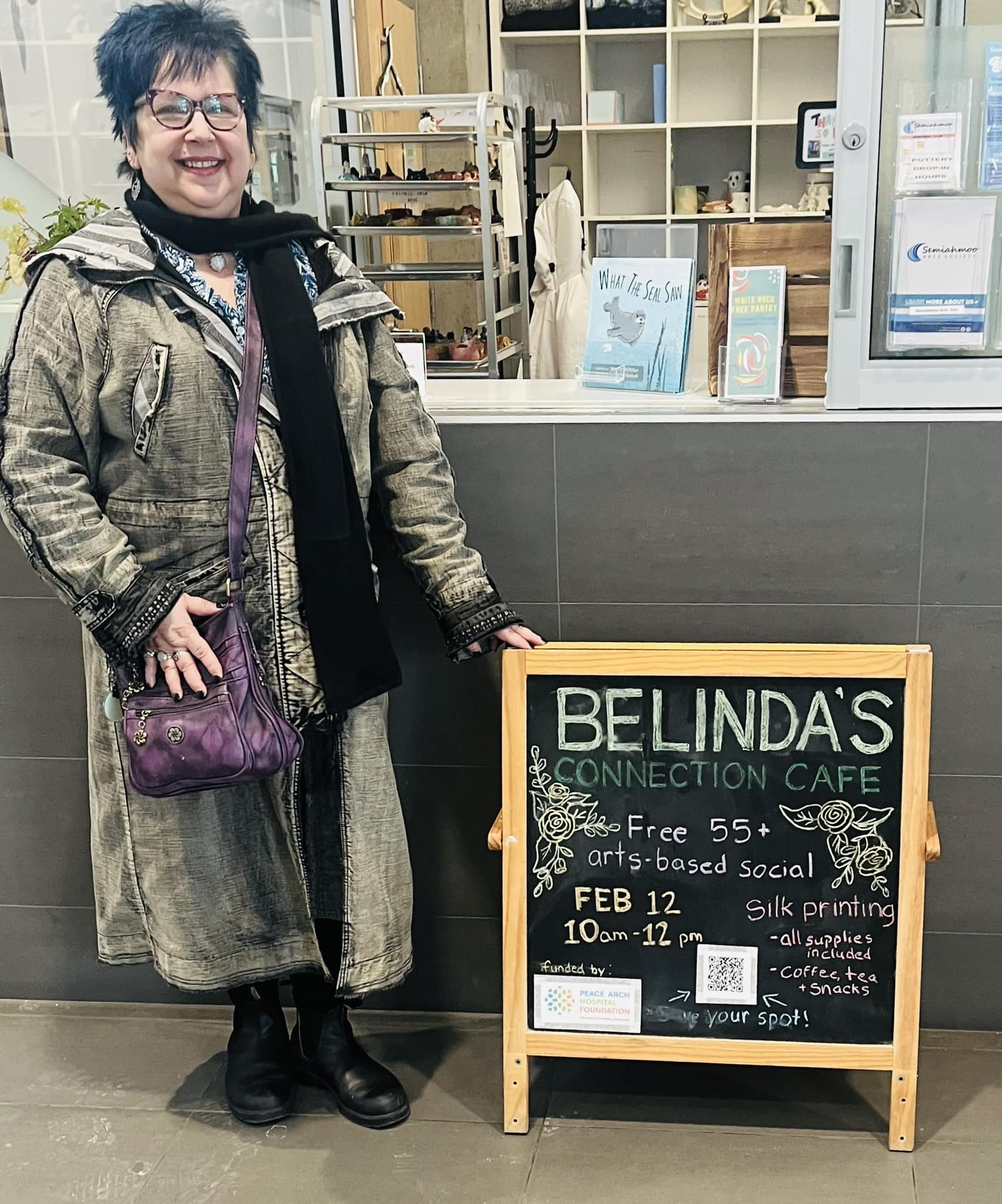
Mallory: In 2022, you launched Belinda’s Connection Café, a free monthly arts workshop series for seniors 55+. After your experience during the pandemic, did you recognize a need for an arts initiative like this in the community?
Lyn: Coming out of the pandemic, I thought about how I could personally continue making sure that seniors had a way of connecting with other seniors. Since arts is my background, I created arts related workshops. It’s been 3 years since I started this. The first one was facilitated with a local United Way grant—it was a micro grant for $1,000 to do a project in the community that brought people together.
I had a friend whose mom had passed away from cancer, and she lived in Delta. She used to put tea parties together for seniors, just because she wanted to. As I was talking to my friend about what I should name it, we were discussing “connection cafe.” And then, I said, “Your mom's name just came into my head - we're going to have to name it after her!” So it's called Belinda's Connection Café.
It was Belinda, and connecting with isolated seniors during my emergency response community builder work, that inspired me to do this.
Mallory: Can you tell us more about how it evolved?
Lyn: There was a glass fusion workshop that my coworkers at the Arts Council of Surrey had put together when it was still the pandemic. We were still isolated, had our own tables and all still wearing masks. I was looking around the room, thinking there are 15 people here, and there are only 2 that aren't seniors. All these things were coming together at the same time. I also had access to the space at the Newton Cultural Centre through work. The next year I got a $5,000 New Horizons grant from the federal government that I learned about through a free seniors program I attended on storytelling.
I was able to increase the number of workshops from 5 to 9. So now, every year we have 9 workshops in Surrey from September to June. And it's grown. The United Way community builder in Delta here, said, “How would you like to bring your Belinda's Connection Café to the city where you actually live?” I said, “Oh, that'd be a nice idea, sure!” So in the summers I apply for the grants again, and I do 2 to 3 workshops in Delta.
Last November, I was paying my membership with the Semiahmoo Arts Society, and the Executive Director told me they received some funding from Peace Arch Hospital Healthy Communities. I’ve done two there in the past couple of months, so this is now a third location!
Mallory: It’s really growing! There's a need for this in these communities.
Lyn: Absolutely. I have evaluation forms that I give out every workshop. One participant is about 87; she uses a walker and doesn’t go out much, and has expressed that she wishes she could do this more than once per month. I don't want any senior to ever have to pay for a workshop. Even if I charge $5.00 that could mean it’s a barrier for somebody. I always have to find funding. I've been very lucky that the last couple of years the Arts Council of Surrey has helped with funding because they realize what a great thing this is. I'm so lucky that I'm able to have that space and those resources there, and that everybody, my colleagues, and the Arts Council, are all so supportive of the program.
For the original series at the Newton Cultural Centre, I usually arrive early in the morning. I make coffee and tea. My husband goes shopping for fruit and cookies, and he puts up the tables. We do everything except for the facilitation of the actual workshop. I'm more of the coordinator now. In April, I am teaching a collage class [Lyn laughs]! because I want to teach again. I have a wide network of people that I can ask to facilitate a workshop. In my way of making connections, I've also connected with people that I didn't know before. One of the elders at FRAFCA (Fraser Region Aboriginal Friendship Centre Association) came and did a mini drum making session with deer hide, so that was a new connection for me.
I try to do as much as possible by reaching out to as many communities as I can. It’s mostly women attending, but we do have a few men who come. We have people coming from different cultural backgrounds. I would like to see more. I bring in one youth facilitator every year. We rent out spaces for dance groups to have their dance classes there at the Newton Cultural Centre, and there are two women that do Indian classical dance—Bharatanatyam and Kathak. I asked the Kathak instructor if she could do a seated dance workshop because some of our participants aren't mobile, so not everybody would be able to dance. And so she did! She had her finery on, and she did a dance so everybody could see how beautiful it was, and then she did something that just showed arm movements and everybody followed along. One of the participants later took solo dance classes with her. There are all of these wonderful things that come out of this program that I didn't plan. They just happen organically. And, I'm thrilled when that kind of stuff happens, because I didn't see it coming.
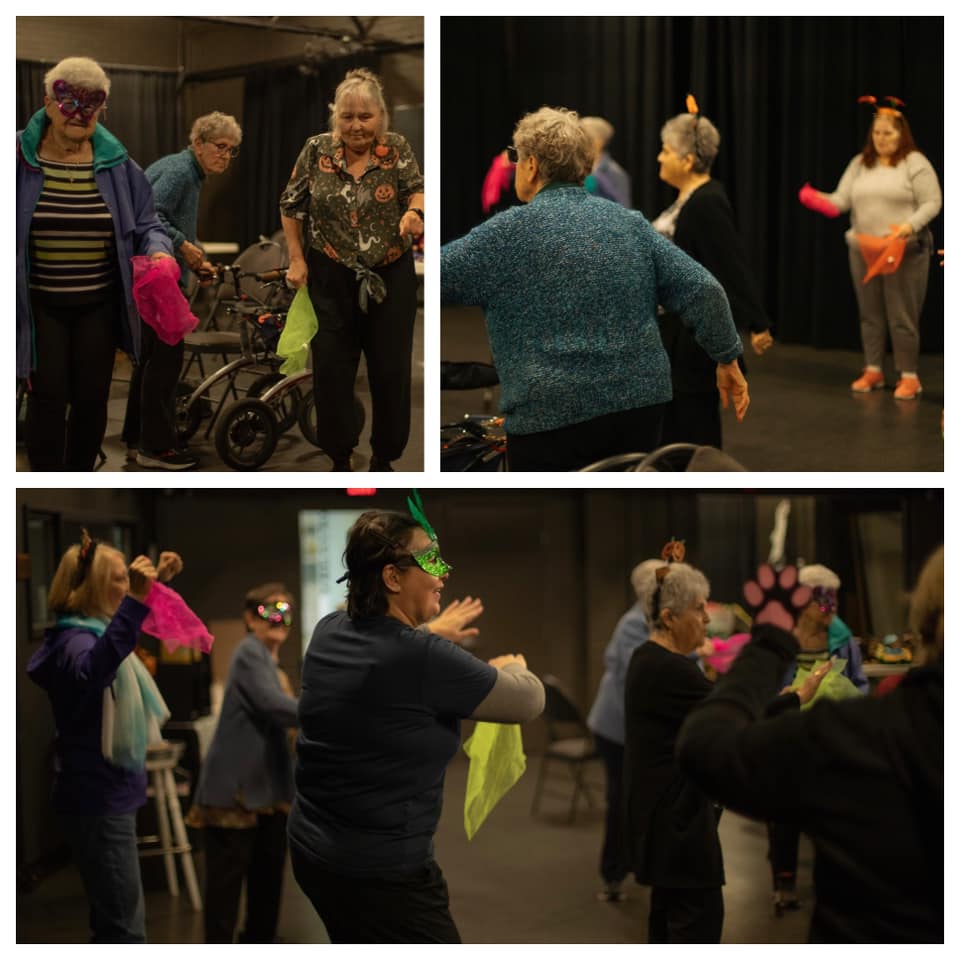
Mallory: It’s rewarding when you're able to give people that kind of space to get out of their comfort zone and learn new things about themselves. It’s inspiring to know that you're making these workshops as accessible as they can be for seniors or people who maybe have disabilities or mobility challenges.
Lyn: Yeah! Anybody can come.
A couple of years ago, I had 4 participants come up to me and say “Hey, can we facilitate a workshop?” I said, “Tell me what you've got.” So then, all of a sudden, I've got new facilitators out of people that had just attended before!
Mallory: Can you describe some of the other workshops?
Lyn: We have one with Studio Seventy Three, and it's a fused glass workshop, where you make soap dishes, tea light holders, and suncatchers with 6in by 6in squares of clear glass and add bits of coloured glass that get fused on in a kiln. I've got a great relationship with them. And it started with my emergency response work.
Studio Seventy Three is supported by Community Living Society. It’s wonderful work that they do there. I always get them to do a workshop at least once a year. I also bring them to Delta, and it's probably one of the more popular ones. People keep coming back for that one.
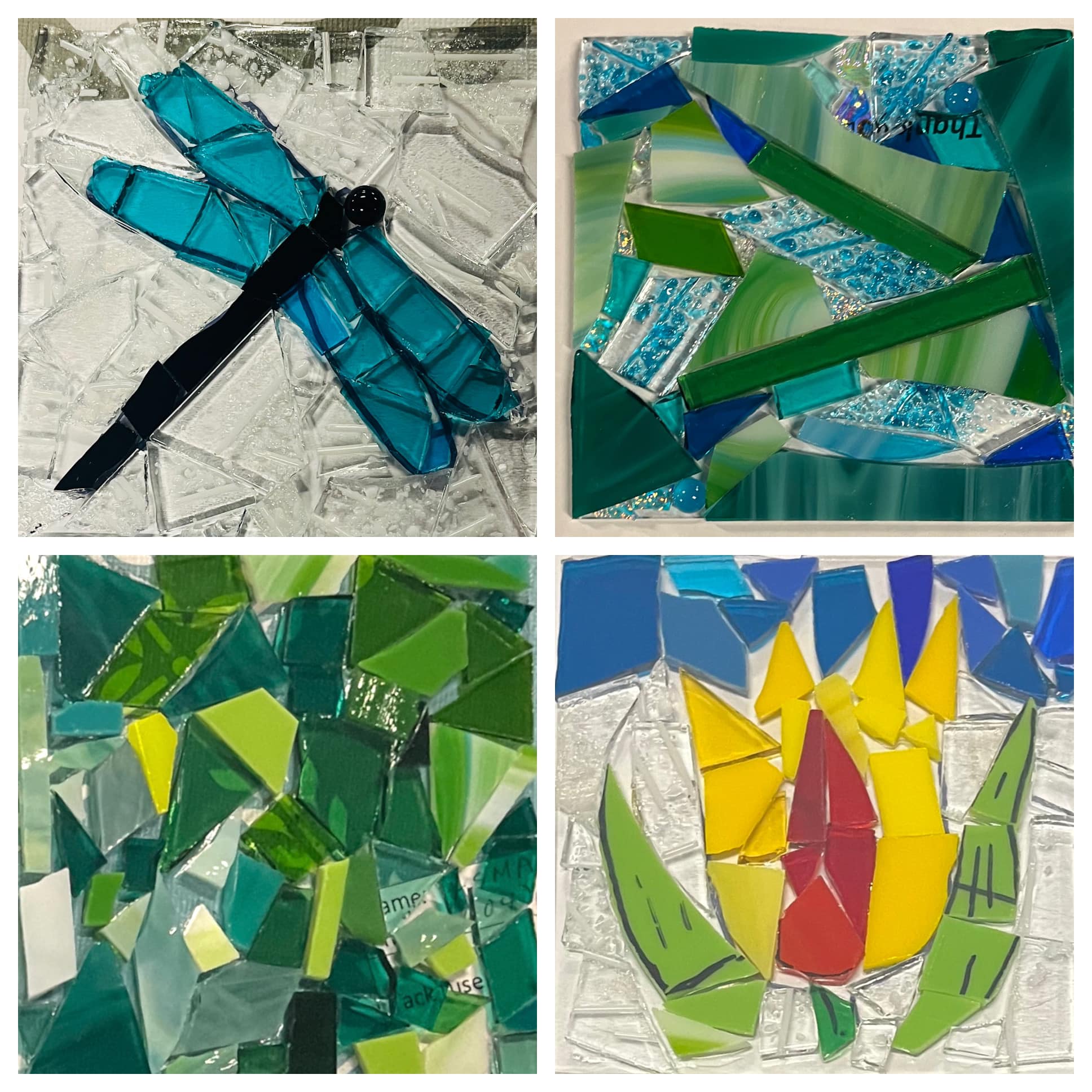
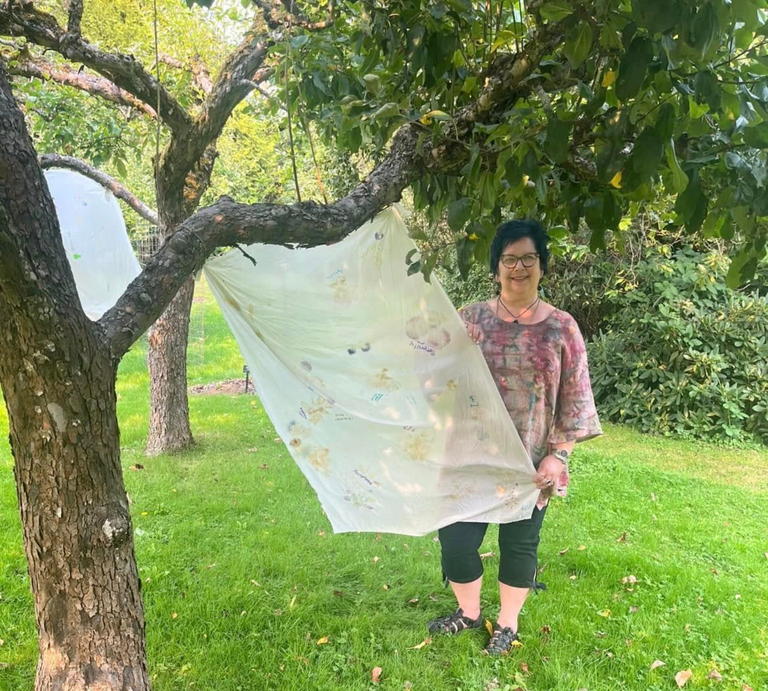
So, overall there's glass, music, and movement. We've done Karaoke. We've done painting. We've done drawing and card making. What else?...Storytelling. We’ve done silk dyeing several times in the community. Everybody gets a silk dyed piece to take home. That was very popular. I think we've done about 37 workshops over the three years. I've reached close to a hundred people involved, ages ranging from 55 to 94.
Mallory: So, you've got really great feedback from the community—this is something that people want!
Lyn: Yes, absolutely. I have a waitlist for the upcoming workshop.
Mallory: How do you see Belinda's Connection Café evolving over the next few years? And specifically, why is it equally important right now as it was when it started.
Lyn: Well, I think just because of the population. Baby boomers are coming of age. There's a big chunk of us. And because that group of people is large, I think we need more initiatives for seniors. I believe that the arts are the best way of connecting and feeling good about yourself. In the first few that I did 3 years ago, people were exchanging emails and phone numbers—they weren't talking to me as much, which is fine! I want them to connect with each other. And participants have done things, like go to lunch afterwards. So that's why I think it's important. I mean, there's only going to be more seniors coming up, so we need more and more things. And personally, I'm not going to push for, you know, lawn bowling. I'm going to push for the arts because of the enjoyable part of art, the therapeutic part of art, and the connecting part of art.
Mallory: Can you speak a bit more to the therapeutic part of it. Why do you feel like art is an important way to reflect on mental wellness?
Lyn: Well, I think a lot of us, hopefully a lot of people, learned during the pandemic that there are things we were able to see and do at a distance. A lot of those things were arts. Big institutions like ballet companies in New York were putting on free programs for people to watch. You could just watch from your home, and it didn't cost anything. Sometimes people think you need to shove the arts away because you think it's not important, and you need to spend your money on ‘more important’ things. But during the pandemic, there was so much art that was offered. There were online workshops - I taught some online workshops! I think it saved us a lot, you know.
Mallory: Most people are more creative than they think they are.
Lyn: I don't know how many times I've heard people say, “I'm not an artist. I can't draw.” I say, “No, everybody can draw.” They say, “But it looks bad.” Well, I can help you with that. I also think this about singing. I used to be a singing teacher as well, and people would say “I can't sing, it sounds awful.” I’d respond, “Well, we can fix that.” Everybody can sing and everybody can draw.
When I teach silk dyeing, it's not a difficult thing to do. But when people come out with their pieces and they're all brightly coloured, they say “Look what I did!” Even people who've never created any art before. That's why I like doing that project because it always turns out nice. And so I guess it's a confidence thing, to see people say, “Look what I did. Take a picture of me with this.”
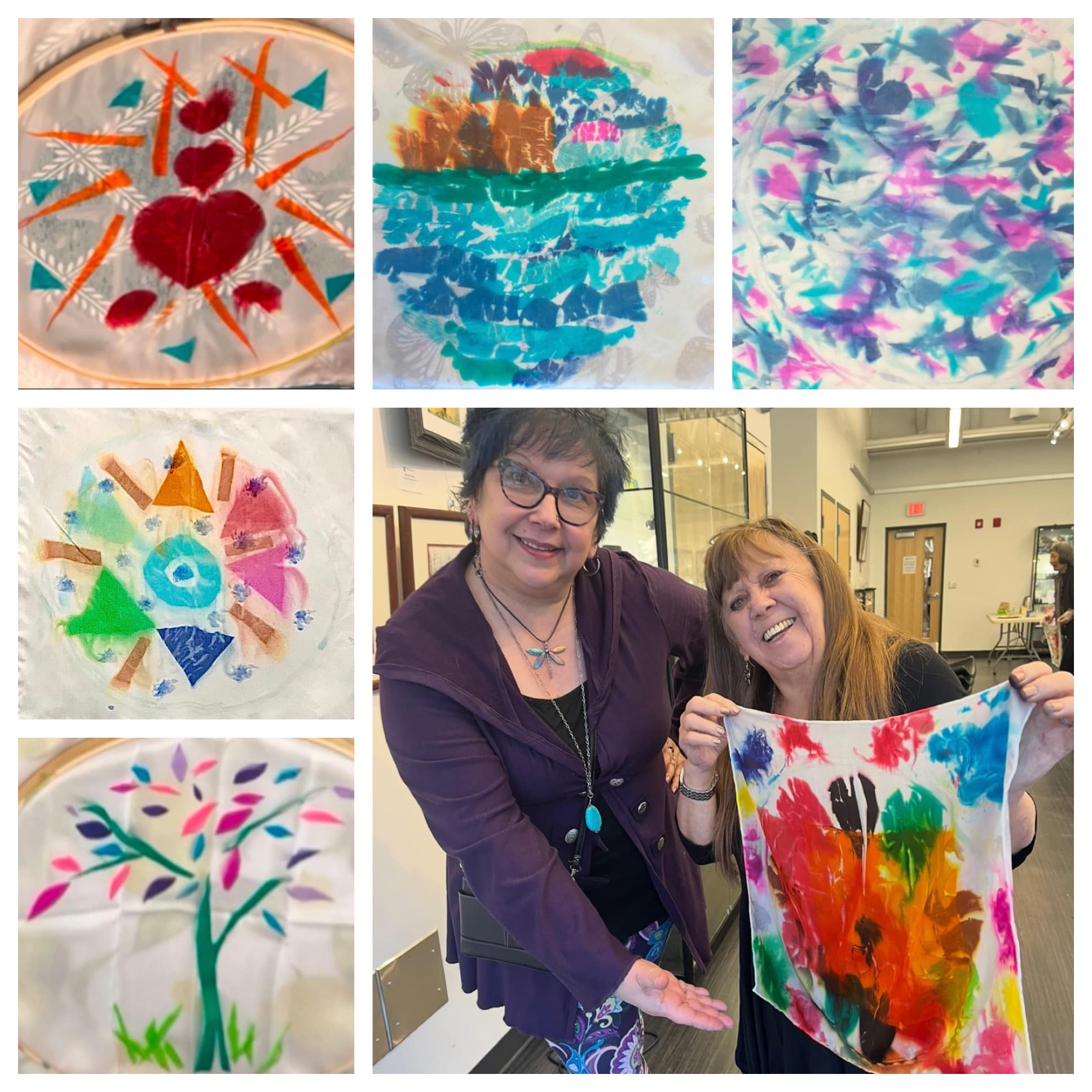
Mallory: It’s satisfying to accomplish creative things, and working on a project like that can help your inner person and the way that you see yourself!
So, Lyn, if you could sum up how you see yourself, how you perceive your artistic career, what would you call yourself?
Lyn: Community is definitely a big thing. At one point I said, I felt I was a matchmaker in the arts through connecting people together.
In the Belinda’s Connection Café evaluation comments the things that come up are: it's a comfortable space; it's an inclusive space; it’s a relaxed atmosphere. You don't have to be great at what we're doing. I encourage people, “If you feel like you want to go on with it, just connect with me, and I can connect you to the right person. I can connect you to resources.”
My award from the Surrey Board of Trade says “Cultural Ambassador.” That’s one of my prouder moments. When I write a bio, two things are always in there. That award and being a BC Culture Days Ambassador.
To learn more about Belinda’s Connection Café and its upcoming events, follow along on Facebook. You can also connect with Lyn on Facebook at The Spiral Rainbow and on Instagram at @community_connects.
More in: BC Ambassador Series
A Legacy of Community Connections—an Interview with Lyn Verra-Lay, Matchmaker of the Arts
Mallory Gemmel
Mar 26, 2025