This is an archived event from Culture Days 2025.
Images
-
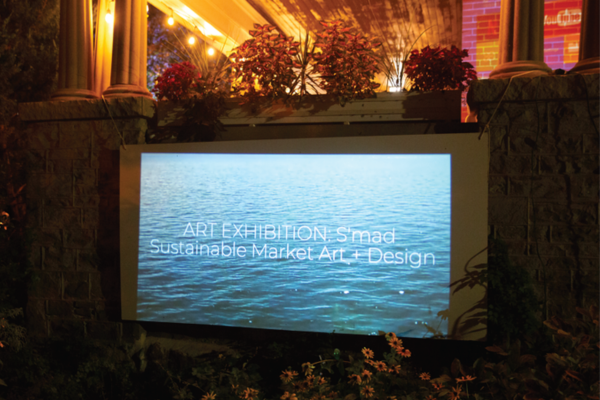
![Art Exhibition: S'mad]() Video art projects from Offsite Nuit Blanche 2024: Photo by Guinevere Pura
Video art projects from Offsite Nuit Blanche 2024: Photo by Guinevere Pura -
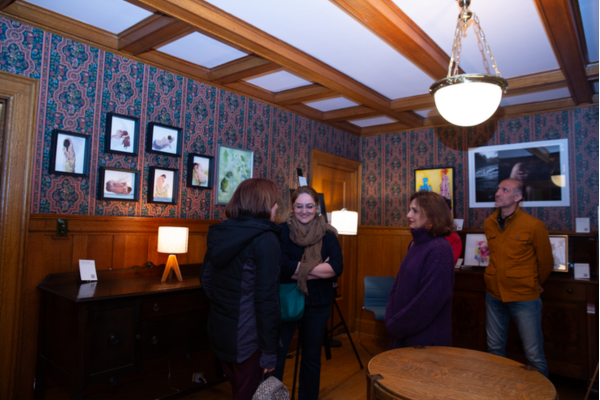
![Salon]() Artwork from Offsite Nuit Blanche2024: Photo by Guinevere Pura
Artwork from Offsite Nuit Blanche2024: Photo by Guinevere Pura -
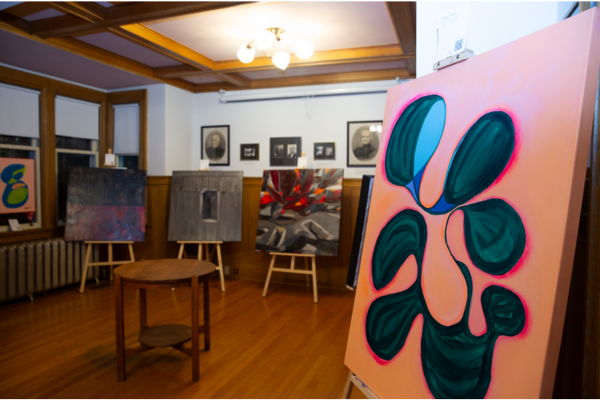
![Salon]() Artwork from Offsite Nuit Blanche2024: Photo by Guinevere Pura
Artwork from Offsite Nuit Blanche2024: Photo by Guinevere Pura
Tkaranto Wiigwaasabak: East to West
In-person
Drawing Performance Indigenous Visual arts Digital & new mediaDate and time
Location
John Mckenzie House- Ontario Historical Society
34 Parkview Avenue
Toronto, ON
Access
Free.
Offered in English and Cantonese.
Wheelchair accessible and has gender-neutral washrooms.
About
About the Exhibition:
This offsite Nuit Blanche exhibition in Toronto explores themes of immigration, integration, and Toronto’s evolving cultural identity. The exhibition, Tkaranto Wiigwaasabak: East to West, focuses on the interplay between newcomers, Indigenous communities, and those with colonial ancestry, examining how these groups connect to Toronto’s natural spaces, ravines, waterways, and green spaces.
Cultural and Historical Context:
The name Tkaranto derives from the Mohawk phrase meaning “where there are trees standing in the water,” a reference to fishing weirs built by Indigenous peoples in Lake Ontario and its waterways. These natural spaces have long been sites of sustenance and gathering for generations, from Indigenous communities to waves of newcomers who bring their own interpretations of nature and urban life.
Today, Toronto is experiencing its largest migration wave in history, adding new layers to this relationship. People from diverse cultural backgrounds connect with the city’s land through traditions, environmental stewardship, and artistic expression, shaping Toronto’s identity as a global city
Scrolls as Cultural Expressions:
Scrolls, as a medium, hold deep historical and cultural significance across various traditions:
• Eastern scrolls often tell stories through poetry, landscapes, and imagery, reflecting philosophical harmony between heaven, earth, and humanity.
• Western European scrolls were primarily ceremonial, used for legal, religious, or administrative purposes, often featuring minimal text.
• Indigenous scrolls, known as Wiigwaasabak, were created by the Anishinaabe people using birch bark. These sacred objects recorded spiritual teachings, rituals, songs, and ancestral knowledge for healing and community life.
Scrolls, across cultures, serve as a transmission of knowledge—a resilient symbol of survival, identity, and spirituality. Indigenous Wiigwaasabak encoded complex spiritual knowledge, preserving teachings through a symbolic language etched into birch bark and bound with cedar or spruce roots.
Links
- S'mad smadartdesign.ca
Organizer
S'mad (Sustainable market art + design)
Vera Kabo Tse, an artist and designer, has returned to Toronto after 16 years in New York. Her group's goals are to elevate Toronto's culture and provide educational opportunities about sustainability through art and design. As a BIPOC organization, S'mad aims to help integrate disadvantaged groups to existing Canadian art and design throughout Toronto's expanding community by combining different art and design organizations on one platform .
Other Events from this Organizer
The Gitchi Manitou Manidoo Onitariio- Life in Toronto
S'mad (Sustainable market art + design)
Toronto, ON