This is an archived event from Culture Days 2022.
Images
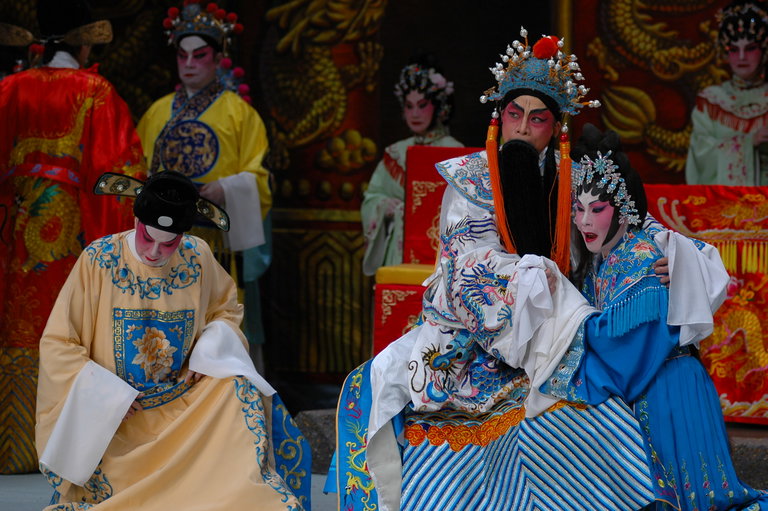
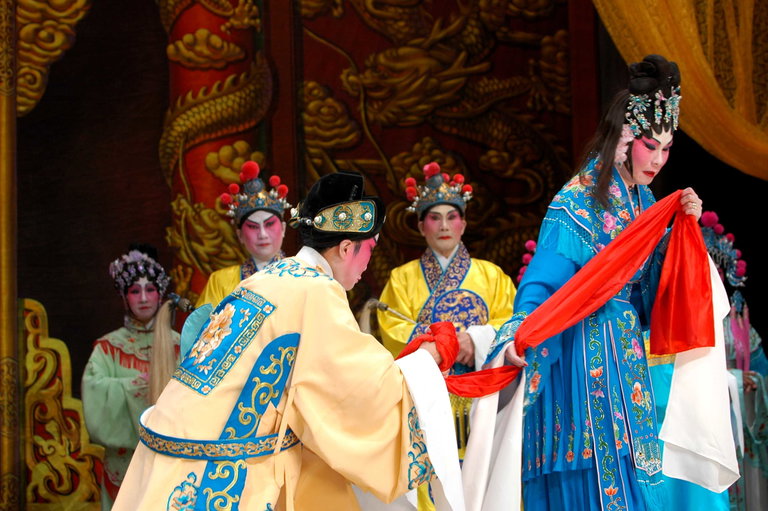
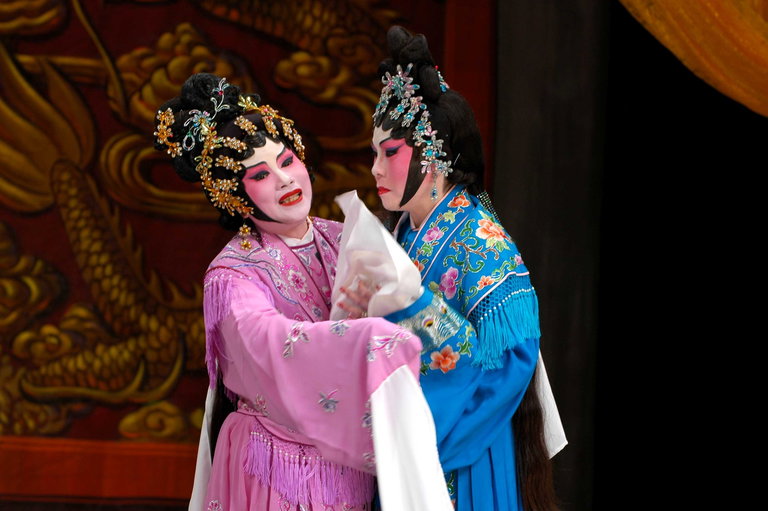
Cantonese Opera In The Cloud - Act 2 "The Calamity"
Digital
History & heritage Music Performance Singing TheatreDate and time
This activity runs the duration of Culture Days.
Location
Surrey, BC
Access
Free, and accepts optional pay-what-you-may donations for admission.
Offered in English and Chinese.
Wheelchair accessible.
zoom event
About
Set in the last days of the Ming dynasty, when the rebel armies of Li Zi Cheng began entering Beijing in the spring of 1644. Emperor Chong Zhen ordered his Empress and consorts to commit suicide rather than be captured and humiliated by the rebel troops. The emperor attempted to kill Princess Cheung Ping but, unbeknownst to Emperor Chong Zhen, he only managed to injure her. Thinking that he had successfully protected his royal family from humiliation, Emperor Chong Zhen hanged himself on Coal Hill (Prospect Hill) behind the Forbidden City. Princess Cheung Ping was later rescued by a Ming minister. The minister, driven by greed, attempted to present her to the Manchu emperor who had ousted Li Zi Cheng and established the Qing Dynasty in China.
Cheung Ping escaped. She hid in a nunnery and was later reunited with her prince consort, Zhou Shi Xian. To fulfill their wishes to have the Ming Emperor properly buried as a former emperor and the Ming Crown Prince released, Cheung Ping and Shi Xian devised a plan. They offer themselves as hostages to the Qing court under the conditions that the Qing court arrange a proper burial for the deceased Emperor Chong Zhen and release the imprisoned former Ming Crown Prince.
To the Qing emperor, it was great political publicity to hold a wedding for the Ming princess and to adopt her as a foster daughter (in reality as a hostage). The Qing court could then show to the citizens of the former Ming Dynasty that the former imperial family had submitted to and accepted Qing rule in China.
After the Qing Emperor fulfilled his promises, Princess Cheung Ping and Prince Consort Zhou Shi Xian were married in the palace. To carry out their ultimate plan, on their wedding night, they committed suicide by toasting each other poisoned nuptial wine. This scene is performed in the last section of the opera and is considered one of the most important highlights of the opera.
Links
- Cantonese Opera In the Cloud vancanopera.com
- Make a donation vancanopera.com
Organizer
Vancouver Cantonese Opera
Vancouver Cantonese Opera is uniquely situated as a Canadian arts organization deeply rooted in its local community yet maintaining strong global ties to the opera scenes in China, Hong Kong, and North America. We work closely with performers and audiences at home and abroad, exchanging ideas and mutual support.
In the local context of Vancouver, BC, our organization continues to serve the Chinese-Canadian community as a site of creative expression, social bonding, and cultural exchange. While our current audience is primarily Chinese-Canadian opera fans, we have a growing audience of diverse Canadians. What distinguishes our work from other opera troupes is our focus on outreach to broad audiences, including non-Chinese viewers, youth, and families. Our performances are subtitled in English and we provide workshops, demos, and classes in English to a general audience. We have brought our performances outside the traditional theatre, to perform in libraries, community centers, and cultural festivals.
The rapid gentrification of Vancouver’s historic Chinatown in recent years has raised the stakes for our work, as we struggle to keep alive the stories and theatrical practices so rooted in Chinatown’s history and culture. Despite our best efforts, we believe that bolder steps need to be taken to safeguard our traditional heritage. Therefore, our creative vision for the future is to engage more effectively and strategically in reaching out to new audiences, especially the younger generation who must carry the torch with our art form.
We realize dramatic steps are needed to realize this goal and that a single-minded focus on innovation and risk-taking is both necessary and desirable. We have thus reached out to new community partners to engage in more creative forms of performance and outreach. In particular, we plan on working with the younger generation of performers and artists to launch an exciting, new repertoire of performances that incorporates new media. Building on our past successes and strong local following, we believe this new direction has great potential to address our broader goal of sustaining the Chinese-Canadian heritage in a meaningful, open-minded, sustainable, and creative way.