Finding Your Creative Voice: Stand Up For Mental Health
Mallory Gemmel & David Granirer
Jun 23, 2025
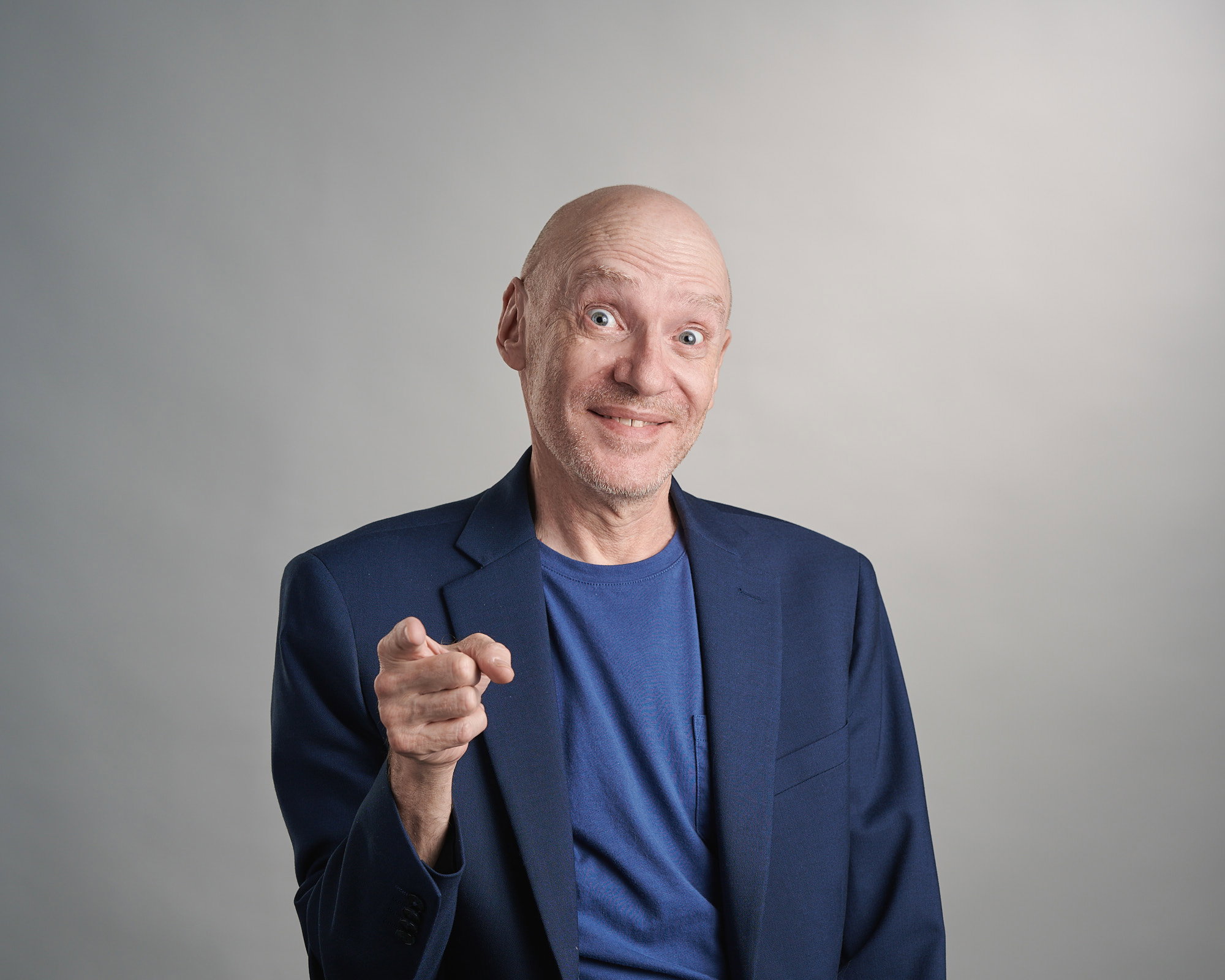
Over twenty years ago, David Granirer founded the award-winning program, Stand Up For Mental Health (SMH Comedy Society)—a Vancouver-based and low-cost educational opportunity where people with mental health challenges learn the art of stand-up comedy. This six-month program has shaped paths for dozens of people, helping those individuals build confidence, find their creative voice, fight public stigma of mental health, and blossom into comics and performers. In addition to facilitating the program and presenting frequent comedy shows across the Lower Mainland throughout the year, the SMH Comedy Society puts on a special performance each year for Culture Days. In 2019, Culture Days spotlighted David and Stand Up For Mental Health in a short documentary on the Culture365 Blog, which you can watch here.
Stand Up For Mental Health is the type of initiative that inspired this year’s BC Culture Days Ambassador Series. This year, through the CARE (Community Arts Reimaging Equity & Wellness) Series, BC Culture Days is exploring how arts and culture, creativity, and connection can support mental health and wellness. During Culture Days, our artist ambassadors across B.C. will lead inclusive, participatory arts and cultural activities in their communities. Whether someone is looking to connect with others, try a new art form, or express themselves creatively, these free events in Burnaby, Victoria, Valemount, Vancouver and Fort St. James are designed to provide a safe and supportive space for that journey.
Stand Up For Mental Health is a program proven to champion how creativity is a vessel for change, healing, and hope. Mallory Gemmel from BC Culture Days sat down with David Granirer to chat about how the program came to be, how it’s made an impact, and why arts and culture play such a vital role in mental health and community well-being.
Mallory Gemmel: Can you give our readers a bit of background on how Stand Up For Mental Health Society came to be?
David Granirer: Let me just go right to the beginning. So my background is: I'm a counselor, and I'm a stand-up comic with bipolar disorder. In 1998, I was asked to teach a stand-up comedy course at Langara College, which was a night course that had nothing to do with mental health, but occasionally I would see people come through and they would have these breakthroughs, these life-changing experiences doing stand up. I thought, “Wouldn't it be cool to give this to people who wanted the comedy, but who also wanted the life changing experience?” And so that's what gave me the idea to start Stand Up For Mental Health in 2004. It’s been 21 years.

Mallory Gemmel: Can you tell us more about the society in the Lower Mainland?
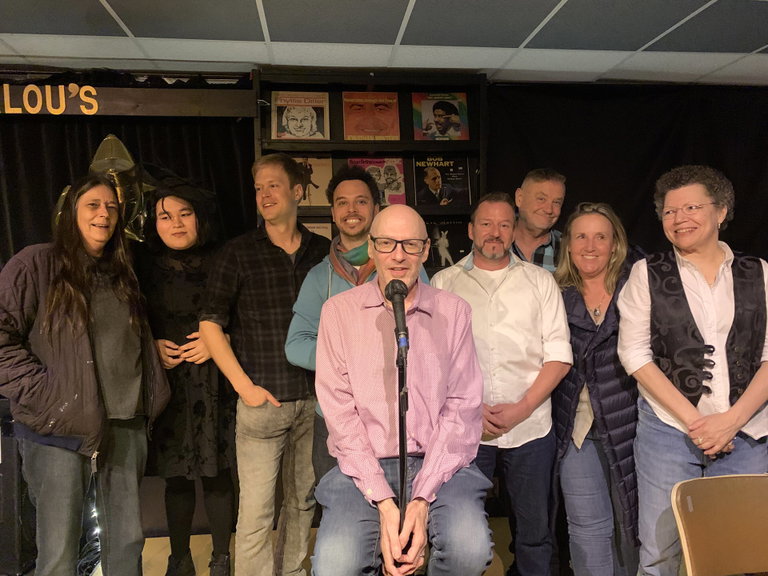
David Granirer: It's a charitable nonprofit society, and we put on Stand Up For Mental Health in the Lower Mainland. The Vancouver group is our flagship program, and it's a six-month course where we meet once a week. We usually start with about 15 comics, and we help them develop four minute acts. So, they do a four minute act at their debut show and then they do a whole new four minute act at their graduation show.
Mallory Gemmel: That’s great! So, throughout the course of the six months you're connecting with them, and you're hosting workshops?
David Granirer: Yes, we have class every week. Most of the classes are writing. So people bring in jokes. We try them. We see what works, what doesn't, and we brainstorm them. Together we come up with material that works. The great thing is, by the time they get to their showcase, I tell them, “We've stacked the deck in your favour because we know you have material that is going to work because we've tried it out in front of the class.” Also, we get them in front of the microphone, and they get to practice their timing, performance, and delivery. Plus, the audience is a Stand Up For Mental Health audience. People are coming to see us. It's not like we walked into a comedy club on a Wednesday night, and people are going, “Why are you doing this?” There are people in the audiences who have mental health conditions, are supporters, and work in the field. It’s just a wonderful, wonderful thing.
Mallory Gemmel: Who are the people that participate in the program? Do they come from all backgrounds and different industries? Or are they typically from the arts and culture or comedy industry?
David Granirer: They represent everything, and these people are always beginners. So, they know nothing about comedy. And they're people from everywhere and all walks of life—all sorts of ages, all sorts of different issues, and all sorts of different diagnoses. So everyone has some sort of mental health condition, whether diagnosed or undiagnosed. But we've had people with PTSD, anxiety, Bipolar, and BPD. You name it. We have the whole gamut of everyone, and a lot of our people are also on disability. So what I tell them is, “If you were taking this course outside of Stand Up For Mental Health, you'd easily be paying $1,500.00.” We cap it at $250.00, and we do a sliding scale on top of that. So we go right down to $5.00 for the six months.
Mallory Gemmel: Wow!
David Granirer: We have never ever turned anyone away for financial reasons, and as long as I'm running this, we never will.
Mallory Gemmel: What’s the latest with Stand Up For Mental Health? Do you have anything exciting coming up?
David Granirer: What's exciting is we have our grad show for the winter group coming up on Monday, and we're doing it at the Comedy Club at the PNE, and it's sold out, which is awesome! There are nine people who are going to graduate. We also just got booked to do the Heart of the City Festival later on in the year.
I do a lot outside of the SMH Comedy Society. I run Stand Up For Mental Health as a corporation, and I've been all over the place. I was just in Belleville and Kingston, Ontario. I was in, of all places, Yankton in South Dakota. I’m heading off to New York City in a couple weeks. I've trained groups in all those cities. I train the groups virtually, and then I fly in to do shows with them. So that's also on top of what goes on in Vancouver, but it's not officially part of the SMH Comedy Society, which is the charitable nonprofit that we run in the lower mainland.
Mallory Gemmel: So in your experience, how does creative expression, especially through comedy, support mental health and healing?
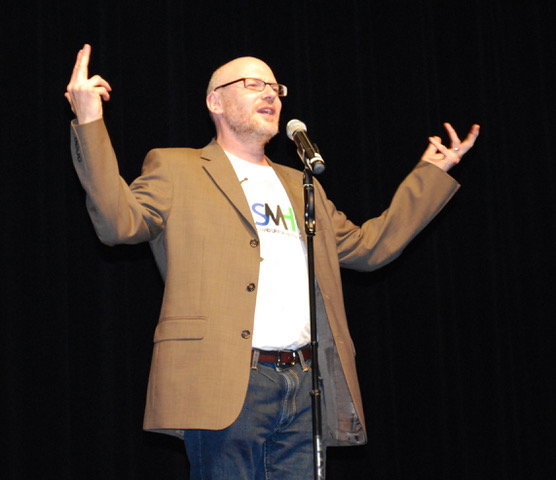
David Granirer: Well, I think, in a number of different ways. First of all, it gives people a chance to tell their story in a way that is powerful and unique and makes people want to listen. There are a lot of presentations on mental health that are either really boring or really depressing. People come and see us, and they get inspired. They feel hopeful. They feel empowered. So it's a great way of starting the conversation. People say, “Oh, you know I can totally relate to that person on stage.” I remember I heard these two people talking after a show, and one of them said,“That guy with schizophrenia was hilarious.” How often do you hear hilarious and schizophrenia in the same sentence?
Mallory Gemmel: How is it helpful for people? Especially if they don't believe themselves to be creative? With Culture Days, we encourage everybody to explore their creativity because a lot of the time there can be hesitation thinking, “Oh, I'm not capable of those things, and I’m not creative.” But once people realize they are, it opens up a whole world for them.
David Granirer: Well, I think a lot of people who come into the class…obviously, they're really nervous. They're scared, and they're thinking, “I could never do this,” and, yet, they do it. They're able to succeed, and that really blows them away because they're able to succeed beyond their wildest dreams. I mean, stand-up is the scariest thing in the world, you know. They say public speaking is, but stand-up is even scarier because you're having to get a laugh every 10 seconds, whereas when you're public speaking, you've got a topic that you're speaking about, and if you're funny, then it's just kind of a bonus. They're doing the scariest thing in the world, and I have people who don’t believe that they are funny then they discover that they are funny.
Mallory Gemmel: It takes a lot of courage.
David Granirer: A lot of courage. And that's the other thing, too—people come to our shows, and they see folks that have all this stigma surrounding them. Instead, they see people who are courageous, funny, likable, and friendly: all the things that you don't associate with mental health conditions.

Mallory Gemmel: Do you have any memories over the years that stand out to you? If comfortable, can you share about a time when Stand Up For Mental Health made a clear impact on someone's life?
David Granirer: One of our comics, his name is Robbie…and I'm not telling you anything confidential because we had CBC do a documentary on us called Cracking Up, which won a voice award. It’s a fabulous documentary, and one of the comics that they followed was Robbie. When I first met Robbie, he had just gotten out of Riverview. He had been there for six months. He was finally stable, which was great, because before going into Riverview he was hearing demons, and he thought he had to drink his own blood and all this kind of stuff. When he came out of Riverview, all he was doing was sitting in his parents basement, smoking, and watching TV. And that's not a life. So his mother brought him to one of our shows, and he came up to me after the show, and he had this big smile on his face, and said “I think I want to do that.”
He took the class, and his mother said, “This has given him a reason to get up in the morning.” We all need that reason to get up in the morning. He was convinced he'd fail, because he had “failed” at everything, but he succeeded, and then he succeeded again, and he became one of our stars. He probably did 30 to 40 shows with us. He's since gone on to become a rapper. He's got a couple albums out, and he said it was Stand Up For Mental Health that gave him the courage to pursue his dream, and he also gives presentations to police at the Justice Institute on Mental Health.
Mallory Gemmel: Why do you believe arts and culture play such a vital role in mental health and community well-being?
David Granirer: I just think there's something really healing about taking what you've been through and turning it into some sort of art piece, some sort of comedy piece, some sort of performance piece, because it gives you a voice. And, I think that a lot of the time when you have a mental health condition, you don't have a voice. Also, you've been told what you can't do. I think working through arts and culture, you show the world what you can do.
Mallory Gemmel: Do you think there are enough initiatives out there that support people to explore themselves and their creativity in this way?
David Granirer: Do I think there's enough initiatives? No. I think we need lots more. And of course, you know, and I don't mean to sound cynical…it's a funding thing. It's all about money. I hate to say that. But it's true. You have the money, you can put on your program. You don't have the money, you don't get to put on your program. So no, I don't think there's nearly enough arts and culture programs.
Mallory Gemmel: What advice do you have for emerging arts and cultural organizers who want to start an impactful social initiative similar to yours? For example, participants in the BC Culture Days Ambassador Program this year are all part of this program because their art practice connects to mental health, healing, or wellness in some way. Some of them are exploring expressive arts therapy, or they're working towards becoming community arts and culture organizers.
David Granirer: What advice? Well, obviously, you need to be clear on what it is that you're creating, because sometimes people aim too wide. You know, we want to do this, and then we want to add a little bit of this, and then we'll add some mental health first aid. Define what you want to do. Personally, my experience is, make it narrow rather than too big. Get what you're going to do. Stand Up For Mental Health is really narrow; it's about stand-up comedy. We're not doing improv. We're not doing other kinds of performances. And, once again, it's about money. Where are you going to get your money from? When you put on a program, whether you like it or not, you become a fundraiser.
Mallory Gemmel: Any advice on how you've been able to find financial support?
David Granirer: Well, we always struggle. We get a gaming grant from the Government of BC that covers about half of our budget, and then we sort of cobble together the rest. We get a little bit of money, bits and pieces, from some foundations and we get some private donations. It's always a struggle.
Mallory Gemmel: Have you had any success getting any sort of corporate sponsorships?
David Granirer: Hmm! Not really. Like I said, it's mostly bits and pieces from different foundations, or the rotary club, or things like that. What I find in terms of funding is that
a lot of corporations make it so you can apply for funding on their website. But my sense is, and maybe this is me being cynical, that's a way of screening people out. So if you really want to get funding, you need to know someone in the organization that will champion you. Sometimes going through the website can be a really arduous process. And, you know, to spend all that time and energy and then get turned down. The odds are really poor. It's usually related to personal connections and knowing someone.
Mallory Gemmel: Through Stand Up for Mental Health, you’ve also created a community. Can you tell us more about the Alumni program and how the program continues to impact people even after they’ve completed it?
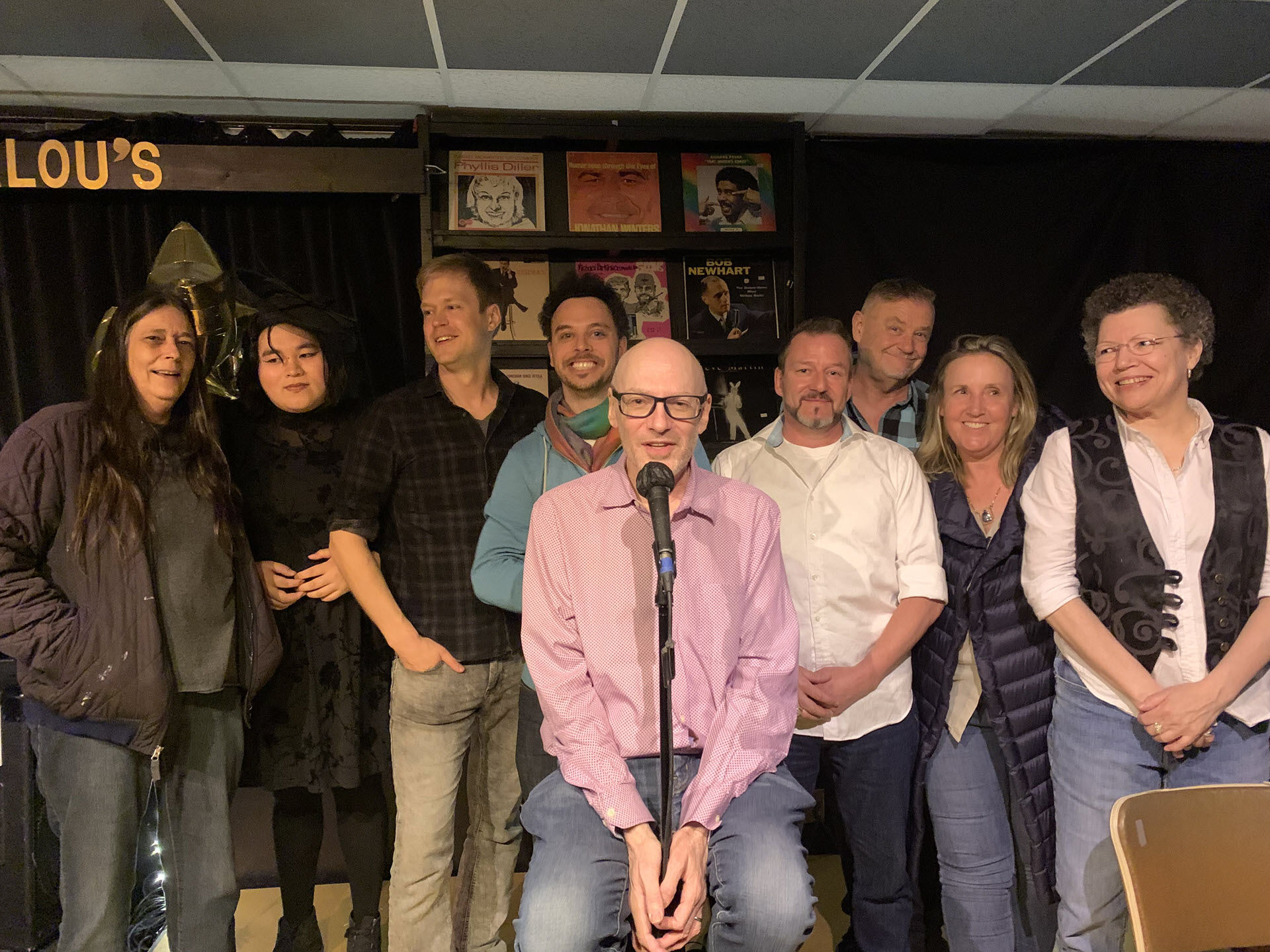
David Granirer: Even in the first level class people get to know each other, and they become friends, and they hang out with each other. So it's really cool to watch them come together as a group. Now, the alumni program is for people who have already taken the first level course, and they want to continue to perform and write. Through the alumni program, we usually do about 15 to 20 shows each year for different organizations. We've done one for everyone: the military, correctional facilities, governments, corporations, universities, colleges, and all sorts of places like that. The alumni are the folks that I draw on to perform at these shows.
Mallory Gemmel: Has the program evolved over time, or is it as it was back in 2004 when it began?
David Granirer: It was very similar in 2004, but it certainly has evolved over time. I'm much better at what I do now. One of the things I really do well is I'm really great at making other people into stars, and I've gotten a lot better at that over the years, and plus what people get now that they didn't used to get is individual coaching sessions in between each class. So they get a lot of my time, which really helps with the quality of the material and helps with the retention rate. And I think it's those individual sessions that really make a difference.
Mallory Gemmel: You’ve been a long-time Culture Days participant—what initially drew you to get involved, and what keeps you coming back?
David Granirer: One of our board members who runs a yoga studio initially got me involved. She said, it'd be great to do a show at our yoga studio every year. So that's how we started, and I took it over and spearheaded it. Every year we put on some sort of show. We're doing our Culture Days show on September 19th, this time at a small space. It's like a little performance space down in Gastown called Enabling Arts. It's been great to be part of Culture Days, and what I find is that it's a great way of getting the message out. People can donate, which is great at the shows, but they're also free, which is really great, too. People can come and not worry about finances.
Mallory Gemmel: Yes, absolutely. Culture Days promotes financially-accessible events. Nobody's ever turned away from participating. Even a small cost can be a barrier in so many different ways. Even if someone has the ability to pay $4.00 to go to a show, sometimes the cost can be a reason for them not to attend and try something new. Through free events, more people are encouraged to explore things that they might not otherwise explore.
What can someone expect at your Culture Days show this year?
David Granirer: It'll probably be about an hour and fifteen minute performance. There will be me, plus about six other comics. You can expect a comedy show, except the comedy show is people talking about their mental health conditions. It'll be funny. It'll be empowering. It'll be fun. It'll be inspiring.
Mallory Gemmel: Is it current participants of the program that will be performing?
David Granirer: It'll be current alumni.
Mallory Gemmel: Thank you so much for chatting with us today. Is there anything else you’d like to share?
David Granirer: I have a vision of where we need to be as a society. When people are working together in a workplace, and someone comes in and says, “I have a headache,” it's no big deal.
Everyone can handle it. People say, “Would you like some tea? Coffee and aspirin? Do you need to sit down?” Someone needs to be able to go into that exact same workplace and say, “You know something, I'm right on the edge of a panic attack, or my voices are kind of loud today,” and it needs to be greeted exactly the same as a headache. No big deal. “Would you like tea? Would you like an aspirin? Do you need to sit down?” And in the gap between where we are and where we need to be—that's where all the prejudice and the stigma that we live with is that Stand Up For Mental Health is trying to educate people about.